

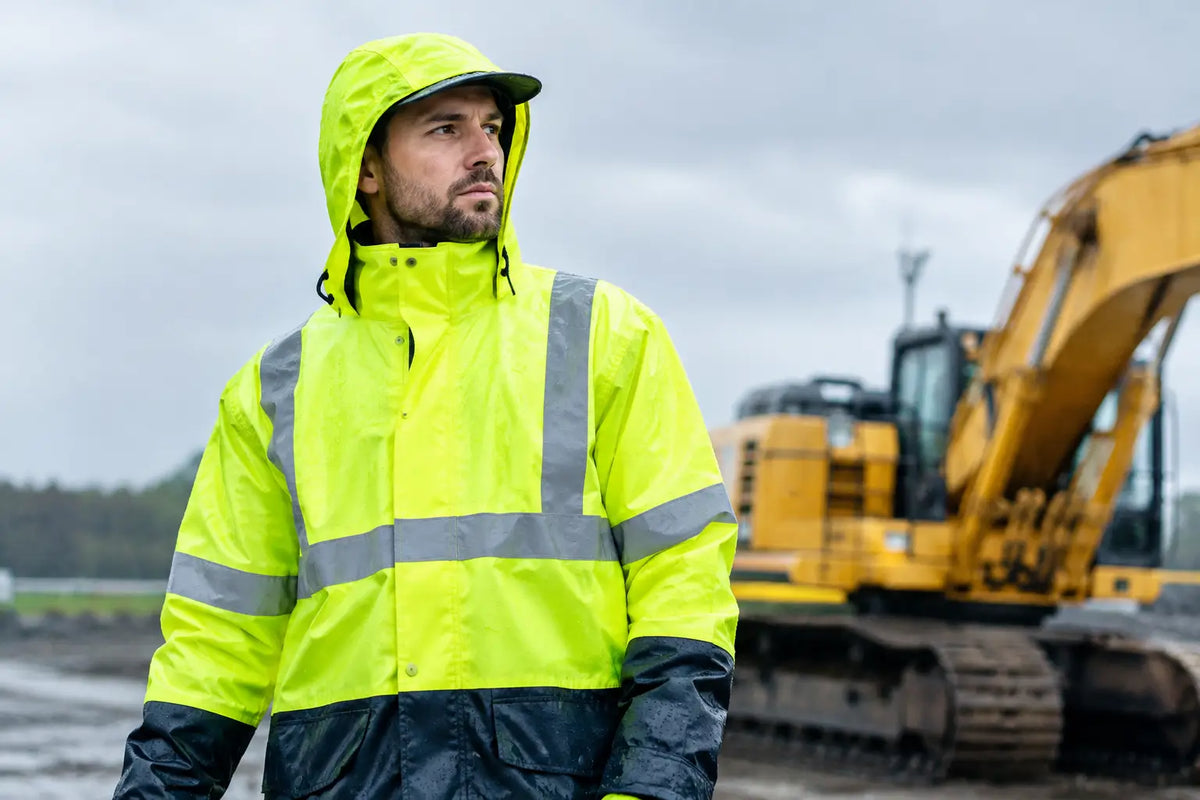
Rain does not pause traffic, shut down a utility call, or make a delivery route safer. When crews work around moving vehicles, equipment, or low-light conditions, waterproof hi vis rain gear needs to do two jobs at once: keep the worker dry enough to stay productive and keep them conspicuous enough to be seen.
That means a bright shell alone is not always enough. The right rainwear depends on the work zone, the amount of traffic exposure, the temperature, the duration of the shift, and what must be worn underneath. A jacket that works for a quick warehouse-yard inspection may fall short for an all-day roadside repair in heavy rain.
Start With the Jobsite Risk
Before comparing pockets, hoods, or colors, look at the exposure. Workers near public roads, active construction traffic, utility vehicles, loading docks, and heavy machinery need visibility that holds up when conditions get gray. Rain, spray, mud, and headlights can reduce contrast quickly, especially before sunrise and after dark.
For many traffic-facing roles, ANSI Class 2 or ANSI Class 3 rainwear is the practical starting point. ANSI Class 2 is often appropriate where workers need added visibility but face lower traffic speeds or greater separation from vehicles. ANSI Class 3 provides more high-visibility background material and retroreflective tape, making it a stronger choice for higher-speed roadways, night work, and jobs where a worker’s full body needs to stand out.
The garment class is not a substitute for a site-specific safety plan. Vehicle speed, weather, work-zone setup, lighting, and proximity to moving equipment all matter. But selecting rain gear with the right ANSI classification gives crews a dependable baseline when visibility is part of the hazard.
Waterproof Hi Vis Rain Gear: What Waterproof Really Means
A water-resistant jacket can handle brief drizzle. Waterproof rainwear is built to resist water penetration during sustained rain, wind-driven spray, and wet-contact tasks. The difference matters when a crew is outside for hours instead of minutes.
Look beyond the word “waterproof” and consider how the garment is constructed. A coated shell or laminated fabric provides the main moisture barrier, while sealed or taped seams help prevent water from entering through stitched areas. Without seam protection, rain can work its way through the places where the garment is sewn together.
A storm flap over the zipper, adjustable cuffs, and a protected collar also help keep water out. These details may seem small at checkout, but they make a real difference when workers are reaching overhead, kneeling near wet pavement, or working in gusty rain.
Breathability is the trade-off. Fully waterproof materials can feel warmer during physical work, particularly when humidity is high. Crews doing strenuous tasks may need venting, a lighter shell, or a layer system that can be adjusted as conditions change. The best option is rarely the heaviest jacket available. It is the one that keeps water out without causing the wearer to overheat halfway through the shift.
Choose a System, Not Just a Jacket
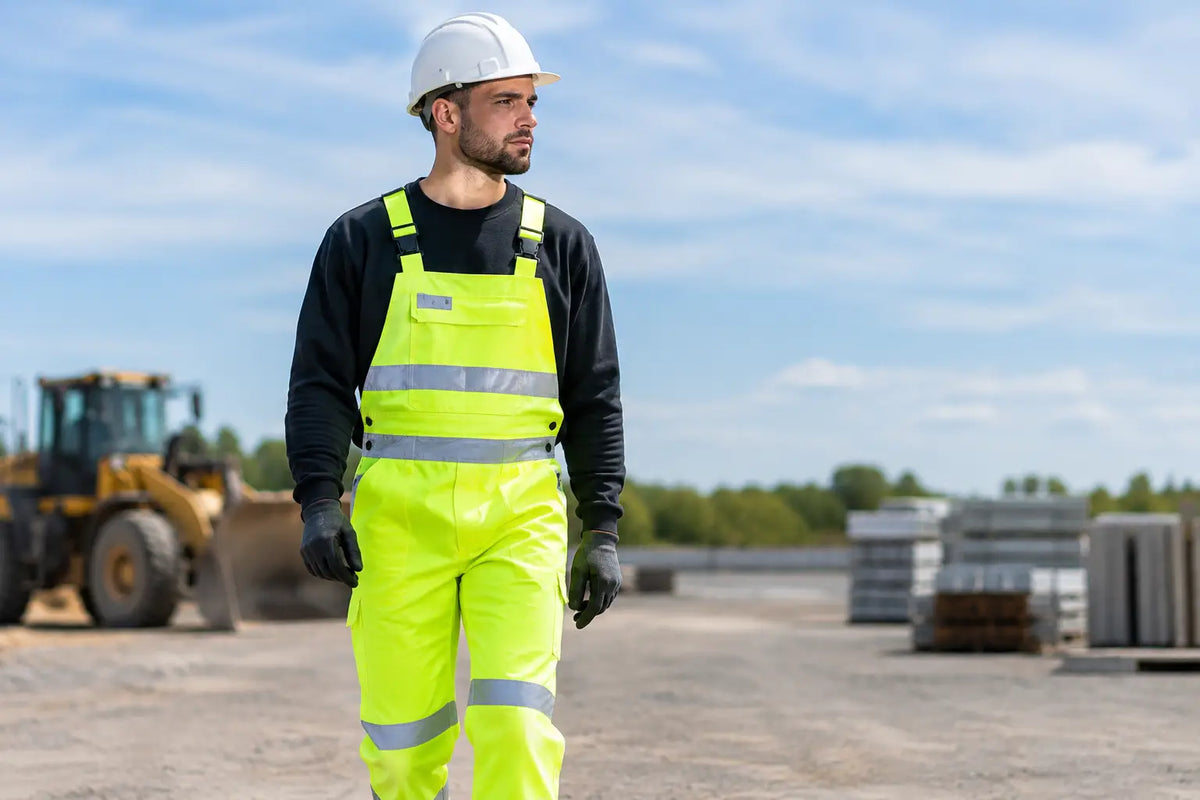
Rain jackets get most of the attention, but wet work rarely stops at the waist. For prolonged exposure, pair a high-visibility waterproof jacket with matching rain pants or bib overalls. This creates better coverage when workers are climbing, bending, operating equipment, or standing in pooled water.
Rain pants are useful for crews who need fast pull-on protection over regular work pants. Bibs provide added coverage across the chest and back, which can be valuable for utility, roadwork, landscaping, and industrial maintenance teams working in steady rain. The right choice depends on mobility needs and how often workers move between indoor and outdoor areas.
Layering also affects performance. In cold rain, a base layer that moves moisture away from the body and an insulating middle layer can help workers stay comfortable. In warmer conditions, a lightweight shell over a safety shirt may be enough. Avoid adding so many bulky layers that reflective tape is obscured, movement is restricted, or the garment fit becomes unsafe.
A proper fit should leave enough room for layers and normal work movement without hanging so loose that it catches on controls, tools, or equipment. Check sleeve length while reaching forward, hood movement while turning the head, and pant length while stepping up onto equipment. PPE only protects when workers can wear it correctly for the full shift.
Features That Earn Their Place on the Job
Every added feature should support the work, not create clutter. A hood is valuable in driving rain, but it should allow a worker to maintain peripheral vision. Adjustable hoods are especially useful when workers wear hard hats, though the hood and helmet setup must not interfere with each other.
Storage matters for crews carrying radios, gloves, notebooks, measuring tools, or small jobsite essentials. Pockets with flaps or water-resistant closures help protect items from rain, while cargo-style storage can be useful for workers who need frequent access to tools. For traffic control personnel, surveyors, and inspectors, organized storage can reduce unnecessary trips to a vehicle or tool bag.
Zippers should be easy to operate with gloves. Cuffs and hems should adjust securely without becoming cumbersome. If a jacket will be worn around moving machinery, avoid loose cords or oversized components that can create snag hazards.
Color selection can also be task-specific. Fluorescent yellow-green is widely used in roadway, construction, and utility environments. Fluorescent orange is common for roadwork, hunting-area operations, and locations where orange is required by site policy. The key is to select a garment that meets the applicable visibility requirements while standing out from the background of the jobsite.
Keep ANSI Performance Visible
High-visibility rainwear is work equipment, and it needs routine inspection. Mud, oil, concrete dust, abrasion, and sun exposure can reduce the brightness of the background fabric and the effectiveness of retroreflective trim. A jacket that looks worn out may no longer provide the visibility a worker needs.
Before a shift, inspect rain gear for torn fabric, damaged seams, broken zippers, loose reflective tape, and heavy staining. Check whether water is beginning to soak through areas that once repelled it. If the garment no longer keeps workers dry or its high-visibility material is badly faded, replace it rather than asking it to stretch through another storm season.
Follow the care label closely. Harsh detergents, bleach, high heat, and improper drying can damage waterproof coatings and reflective material. Cleaning rainwear regularly is not cosmetic. It helps preserve the contrast and reflectivity that make the garment effective around traffic and equipment.
For supervisors and purchasing teams, standardizing rain gear across the crew can simplify replacement, sizing, and ANSI compliance. It also gives the team a consistent, professional appearance. Custom-logo rainwear can add identification without changing the core requirement: workers must remain visible and protected in wet conditions.
Buy for the Shift You Actually Work
A low-cost poncho may be enough for emergency coverage at a short outdoor event. It is not the same as durable ANSI rainwear for a paving crew, utility technician, delivery team, or roadside maintenance worker facing repeated weather exposure. Match the gear to the duration, hazard level, season, and physical demands of the job.
The right waterproof high-visibility setup helps workers stay focused when the weather turns. Keep the rain out, keep the reflective material clear, and make visibility part of the plan before the first drop hits the pavement.

Leave a comment
This site is protected by hCaptcha and the hCaptcha Privacy Policy and Terms of Service apply.