

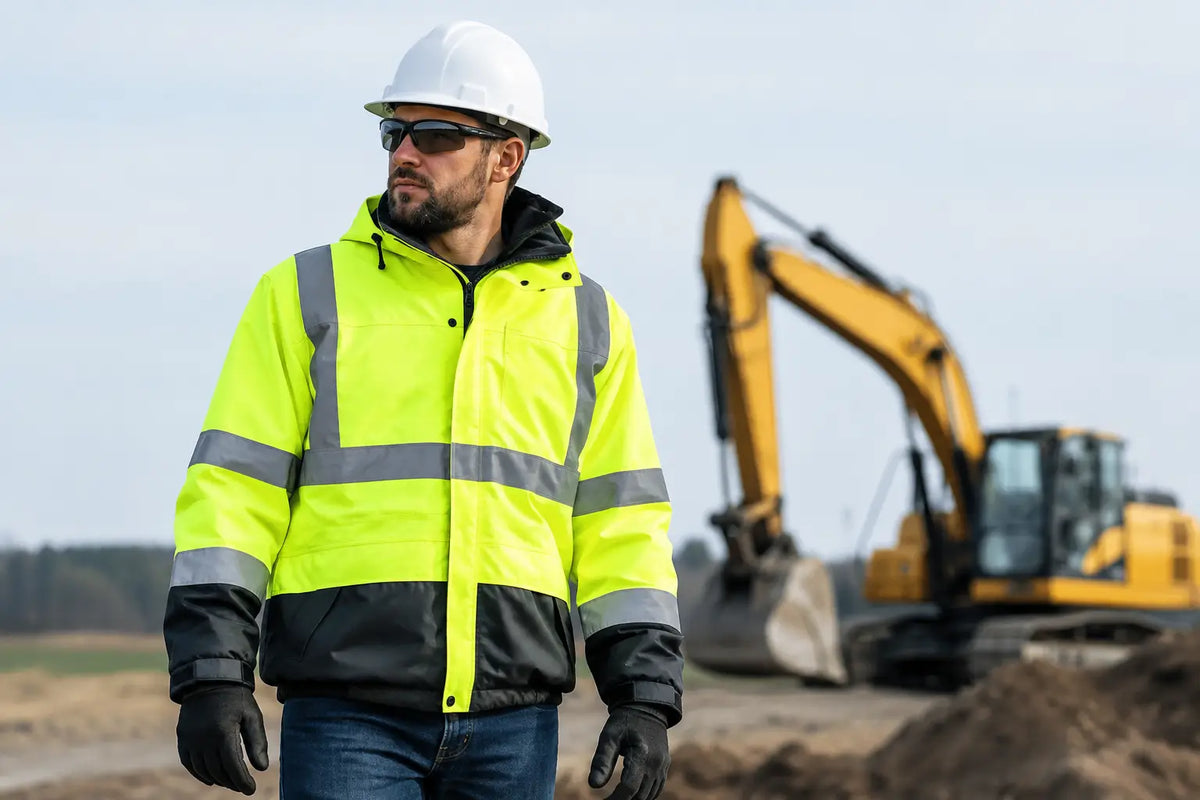
A jacket is often the outermost thing a driver, equipment operator, or coworker sees. That is why ANSI Class 3 jackets are more than cold-weather gear. They are high-visibility PPE built for workers who need to stay conspicuous around moving traffic, heavy equipment, low light, rain, and changing jobsite conditions.
For road crews, utility teams, construction personnel, surveyors, emergency responders, and maintenance workers, the right jacket has to do two jobs at once: deliver the visibility level the work calls for and keep the wearer protected from the weather. A bulky coat that limits movement is a problem. So is a lightweight shell that leaves a worker cold, soaked, or unable to carry essential tools. Selecting the right Class 3 jacket starts with knowing what the ANSI label means and matching the garment to the shift ahead.
What Makes a Jacket ANSI Class 3?
ANSI Class 3 is the highest garment performance class under the ANSI/ISEA 107 high-visibility apparel standard. It is designed for workers in the most demanding visibility environments, particularly where vehicle speeds are high, sightlines are limited, or workers must be noticed from a greater distance.
A compliant Class 3 garment uses more fluorescent background material and more retroreflective material than Class 2 apparel. It also has sleeve coverage and reflective striping arranged to help make the wearer recognizable as a person, not just a bright object. The exact material quantities and layout matter, which is why a bright-colored jacket alone is not automatically ANSI compliant.
Check the sewn-in label before purchasing or issuing any garment. It should identify the ANSI/ISEA 107 standard, performance class, and garment type. Many work jackets are marked Type R, intended for occupational roadside environments, while some are Type P for public safety applications. The right designation depends on the job and employer requirements.
When ANSI Class 3 Jackets Make Sense
Class 3 apparel is commonly required or strongly recommended when workers are exposed to traffic traveling above 50 mph, work at night, operate near vehicle paths, or face complicated backgrounds that make visual detection harder. Think highway construction, roadside utility repair, airport ground operations, overnight maintenance, towing, emergency response, and rail-adjacent work.
It can also be the practical choice when conditions change across a shift. A crew may start in daylight, move into rain, then finish after sunset. A Class 2 vest might be sufficient for a controlled daytime task, but it may not provide the needed coverage once visibility drops or workers are farther from approaching traffic.
That does not mean Class 3 is automatically the answer for every site. Indoor warehouse teams, low-speed private yards, or fully separated work areas may have different PPE needs. Your hazard assessment, contract requirements, company safety program, and applicable local regulations should guide the final decision. When visibility risk increases, however, more conspicuous coverage is usually the smarter standard.
Choosing ANSI Class 3 Jackets by Weather and Workload
The best jacket is the one workers will wear correctly through the full shift. Start with the weather exposure, then consider physical activity, layering needs, and how much storage the job demands.
Waterproof shells for rain and changing conditions
A waterproof or water-resistant Class 3 shell works well for wet roadwork, utility calls, landscaping, and outdoor maintenance. Look for sealed seams, a storm flap, an adjustable hood, and closures that help keep rain out without covering required reflective material.
Breathability is the trade-off. A fully waterproof jacket can retain heat during active work, especially when workers are lifting, walking, or handling equipment. For high-output crews, ventilation features and a roomier fit for lighter base layers may be more comfortable than an insulated rain jacket.
Insulated jackets for cold shifts
When temperatures fall, insulation helps workers stay focused and productive. Insulated ANSI Class 3 jackets are a strong option for winter construction, snow removal, utility restoration, traffic control, and early-morning field work.
Consider how much insulation the job actually needs. Heavy insulation is useful for workers standing outdoors or operating equipment for long periods. Crews doing physical labor may be better served by a lighter insulated jacket that allows easy movement and lets them adjust layers underneath. A jacket that is too warm often gets unzipped or removed, reducing the protection it was meant to provide.
Softshell and athletic-cut options for active crews
Softshell high-visibility jackets offer a balance of wind resistance, light weather protection, mobility, and a less bulky fit. They are especially useful for surveying, delivery support, facilities work, utility inspections, and active construction tasks where a worker needs to reach, climb, bend, and move without restriction.
Softshells are not a replacement for a fully waterproof rain jacket in sustained storms. They are a practical middle layer or outer layer for cool, dry, or lightly wet conditions. Match the garment to the forecast and the task, not just the season on the calendar.
Fit and Layering Affect Compliance in the Field
A compliant jacket only performs as intended when it fits properly. Oversized outerwear can catch on equipment, interfere with tools, and create excess bulk around the arms. A jacket that is too tight may restrict reaching and make workers less likely to wear needed layers beneath it.
Plan for what goes under the jacket. If crews will wear hoodies, thermal shirts, or uniform layers, allow enough room without sizing up so far that the garment becomes unsafe or awkward. The reflective bands should remain visible and the sleeves should not be rolled up. Keep the jacket clean and fastened as designed during exposure to traffic or machinery.
Layering also matters when a Class 3 jacket is removed. If a worker strips off the outer layer during a physically demanding task, what remains underneath may not meet the visibility requirement. Some teams use ANSI-rated shirts or vests beneath outerwear so visibility coverage remains in place as conditions warm up. Verify the classification of each garment rather than assuming multiple lower-class pieces create a Class 3 system.
Features That Earn Their Place on the Jobsite
Practical details separate a jacket that stays in the truck from one that becomes daily equipment. Pockets should support the work, whether that means secure chest storage for a phone, lower pockets for gloves, or interior space for paperwork. Utility workers and survey crews may need pen slots, radio loops, or dedicated storage for small tools.
A hood can protect against rain and wind, but it should not limit peripheral vision. Adjustable cuffs, durable zippers, reinforced wear areas, and easy-grip pulls help when workers are wearing gloves. Dark contrast panels can reduce the appearance of grime in high-wear areas, but they should not compromise the fluorescent background and reflective coverage required for the jacket's ANSI classification.
For organizations outfitting a crew, consistent garment selection makes inspections, replacements, and ordering easier. Custom-logo decoration can also give teams a coordinated appearance, but placement matters. Keep logos and embroidery away from reflective striping and do not alter the coverage that supports compliance.
Care Keeps High-Visibility Protection Working
Dirt, oil, concrete dust, and faded fabric can reduce a jacket's conspicuity. Follow the care label, wash garments when they are visibly soiled, and avoid bleach or harsh treatments that can damage fluorescent fabric and reflective trim. Close zippers and fasteners before washing to reduce abrasion.
Inspect jackets regularly for torn sleeves, peeling reflective tape, broken closures, and heavy staining. Replace garments that no longer provide dependable visibility or weather protection. A jacket can still feel warm while failing the visibility standard your crew depends on.
Outfit for the Exposure, Not Just the Temperature
ANSI Class 3 jackets are built for the moments when being seen has no margin for guesswork: a rain-darkened roadway, a predawn utility call, a nighttime lane closure, or a busy equipment zone. Choose the class, weather protection, fit, and jobsite features that match the exposure your crew faces. Then keep each jacket clean, intact, and ready at the start of every shift.

Leave a comment
This site is protected by hCaptcha and the hCaptcha Privacy Policy and Terms of Service apply.