

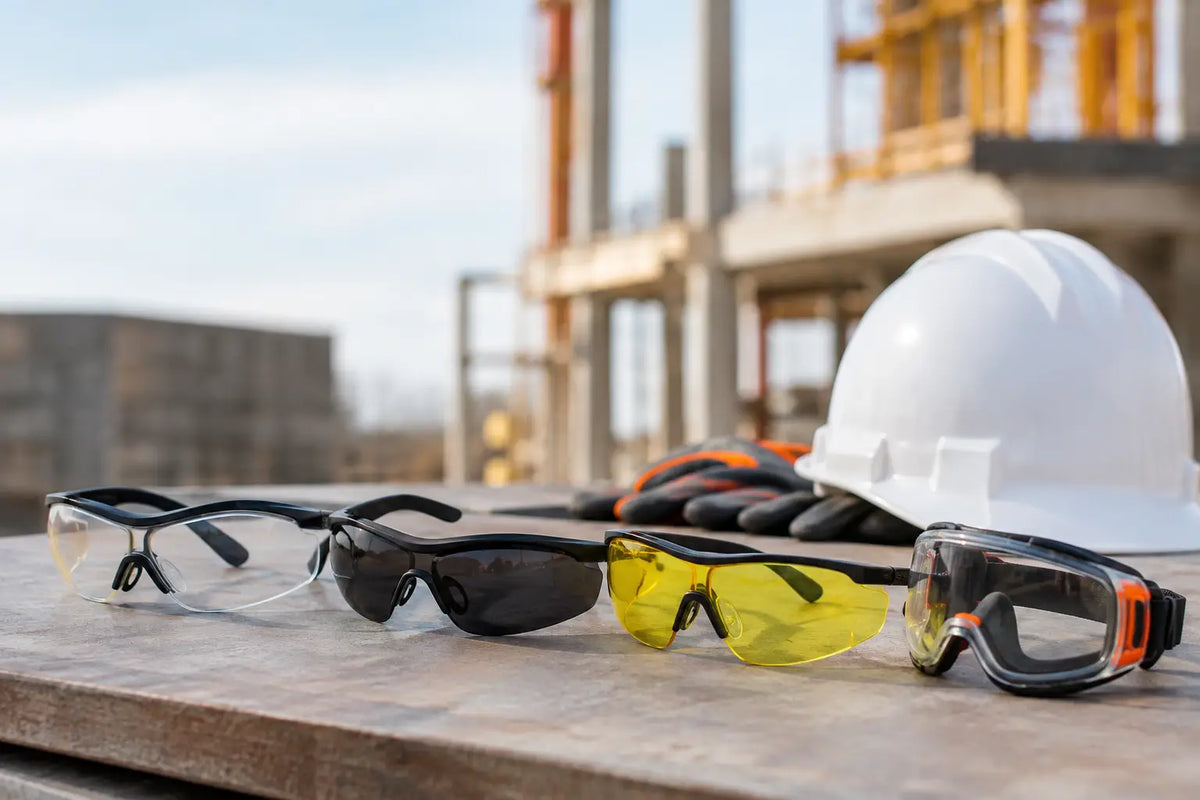
A hard hat protects your head. High-visibility apparel helps drivers and equipment operators see you. Safety glasses protect the one thing no crew can replace: clear vision. A small flying chip, a pressurized splash, or a gust of dust can turn a routine task into an injury in seconds.
For construction, utilities, warehouse, roadside, landscaping, maintenance, and industrial crews, eyewear should be selected for the exposure, not grabbed as an afterthought at the gate. The right pair stays on, stays clear, fits the task, and carries the markings required for the hazard.
Start With the Hazard, Not the Lens Color
Clear lenses are the everyday choice for indoor work, low-light conditions, and general impact protection. But clear is not automatically the right answer. Workers cutting metal, handling chemicals, operating outdoors, moving material in dusty areas, or working near traffic each face different conditions that call for different eyewear features.
Impact is the baseline concern on many jobsites. Grinding, drilling, fastening, demolition, mowing, material handling, and overhead work can send particles toward the face without warning. Look for safety eyewear marked to ANSI/ISEA Z87.1. Products marked with “Z87+” are rated for high-impact protection, while “Z87” indicates basic-impact protection. For jobs with flying debris or forceful impact potential, that plus sign matters.
Chemical exposure changes the equation. Standard safety glasses with open sides may not provide enough coverage when there is a splash risk. Safety goggles provide a closer seal around the eyes, and a face shield can add coverage for high-splash work. A face shield is not a substitute for primary eye protection - wear safety glasses or goggles underneath it.
Dust, wind, and airborne grit can be just as disruptive as a visible impact. Workers on roadside crews, landscaping teams, outdoor utility sites, and dusty production floors may benefit from foam-lined eyewear or sealed goggles. The trade-off is ventilation. More coverage can reduce airflow and increase fogging, especially during physically demanding work or humid weather. Choose the level of sealing that matches the actual exposure.
What ANSI Markings on Safety Glasses Mean
ANSI markings are more than a label. They help purchasing teams and workers confirm whether eyewear is built for the protection level required on the job.
The ANSI/ISEA Z87.1 standard addresses eye and face protection devices used in occupational settings. A marking on the frame and lens can identify the eyewear’s impact rating and, in some cases, specialty protection. Depending on the product, markings may indicate resistance to splash, dust, fine dust, optical radiation, or other hazards.
Do not assume every pair with a sporty frame or wraparound lens is compliant. Everyday sunglasses and fashion eyewear may look durable but are not designed or marked for occupational impact protection. For crews, buying compliant eyewear is the easy part. Building a habit of checking the markings before work begins is what keeps the standard active in the field.
Safety managers should also match the eyewear program to the site’s hazard assessment and company requirements. A warehouse picker may need clear Z87+ glasses for impact protection. A welder needs properly rated filter lenses or a welding helmet system for the process being performed. A worker handling corrosives may need indirect-vent goggles and additional face protection. One box of general-purpose eyewear will not cover every department.
Lens Tints Have a Job to Do
Lens color affects comfort and visibility, not just appearance. Clear lenses work well indoors and in dim environments. Gray lenses reduce brightness and are useful for general outdoor work. Amber or yellow lenses can improve contrast in certain low-light or overcast conditions, but they do not replace proper illumination. Mirrored and dark lenses may be comfortable in strong sun, yet they can make it harder to see hazards when moving into a shaded area, cab, warehouse, or tunnel.
For workers moving between bright outdoor conditions and indoor spaces, photochromic lenses can be convenient. They adjust with changing light, although transition speed and performance can vary with temperature and vehicle glass. Keep a clear-lens option available when the shift includes poor light, nighttime operations, or detailed indoor tasks.
Fit Determines Whether Protection Stays in Place
The safest eyewear is the pair a worker can wear for the full shift without constantly pushing it up, taking it off, or setting it on a toolbox. Poor fit creates gaps, pressure points, fogging, and distractions - all of which lead to noncompliance.
The frame should sit securely on the nose and ears without pinching. The lens should provide coverage across the eyes and close enough to the brow and cheeks to limit entry points for debris. Temple arms should not conflict with hearing protection, hard hats, respirators, or helmet straps. Wraparound designs often provide strong side coverage, but some workers need flatter frames to accommodate prescription lenses or other PPE.
For prescription wearers, there are several workable options. Prescription safety glasses can provide a dedicated, comfortable solution for frequent use. Over-the-glasses safety eyewear fits over many everyday prescription frames and is often practical for visitors or occasional tasks. Inserts may work with certain goggle systems. The right choice depends on frequency of use, exposure level, and whether the eyewear has the required ANSI marking as a complete system.
Comfort is not a luxury feature. Soft nose pieces, adjustable temples, lightweight frames, and anti-fog coatings can make the difference between eyewear that remains on the worker’s face and eyewear that ends up in a pocket.
Control Fog Before It Controls the Work
Fogging is one of the most common reasons workers remove eye protection. It happens when warm, humid air from the body or a face covering meets a cooler lens surface. Rain gear, respirators, high-exertion tasks, and fast weather changes can make it worse.
Anti-fog coated lenses help, but coatings are not permanent magic. They perform best when lenses are cleaned correctly and replaced when scratched, worn, or difficult to keep clear. Ventilated goggles, better frame fit, and compatible respirator positioning can also improve airflow. If a worker is repeatedly fighting fog, do not treat it as a personal issue. Review the eyewear, the surrounding PPE, and the task conditions.
Avoid wiping lenses with a dirty shirt, paper towel, or abrasive rag. Fine grit can scratch the surface, reduce clarity, and weaken anti-fog or anti-scratch coatings. Rinse off loose debris when possible, use lens-safe cleaner, and dry with a clean microfiber cloth. Store eyewear in a case, pouch, or protected compartment instead of leaving it loose in a truck cab or tool bag.
Replace Damaged Eyewear Before the Next Task
Safety glasses are work equipment, and work equipment wears out. Scratched lenses scatter light and make detail work harder. Cracked frames, loose temples, missing side shields, damaged foam, and warped lenses can reduce coverage or interfere with fit. A pair that has taken a direct impact should be inspected closely and replaced if there is any damage or uncertainty.
Build a quick eyewear check into the start of the shift. Workers should confirm that lenses are clear enough to see through, frames fit securely, markings are present when required, and the eyewear matches the day’s task. Supervisors can support that habit by keeping replacement pairs accessible where work begins, not locked away across the site.
For larger crews, standardizing a few proven options simplifies replenishment while still giving workers choices for clear, tinted, anti-fog, goggle, and over-the-glasses needs. Stock enough eyewear that a lost or damaged pair does not become an excuse to work unprotected. Safety glasses are small, affordable gear with a direct effect on whether someone finishes the shift with their vision intact.
The next time the crew gears up, make eyewear part of the same automatic check as boots, gloves, hard hats, and high-visibility layers. Pick protection for the hazard, verify the rating, and keep a clean replacement pair ready to go.


Leave a comment
This site is protected by hCaptcha and the hCaptcha Privacy Policy and Terms of Service apply.