

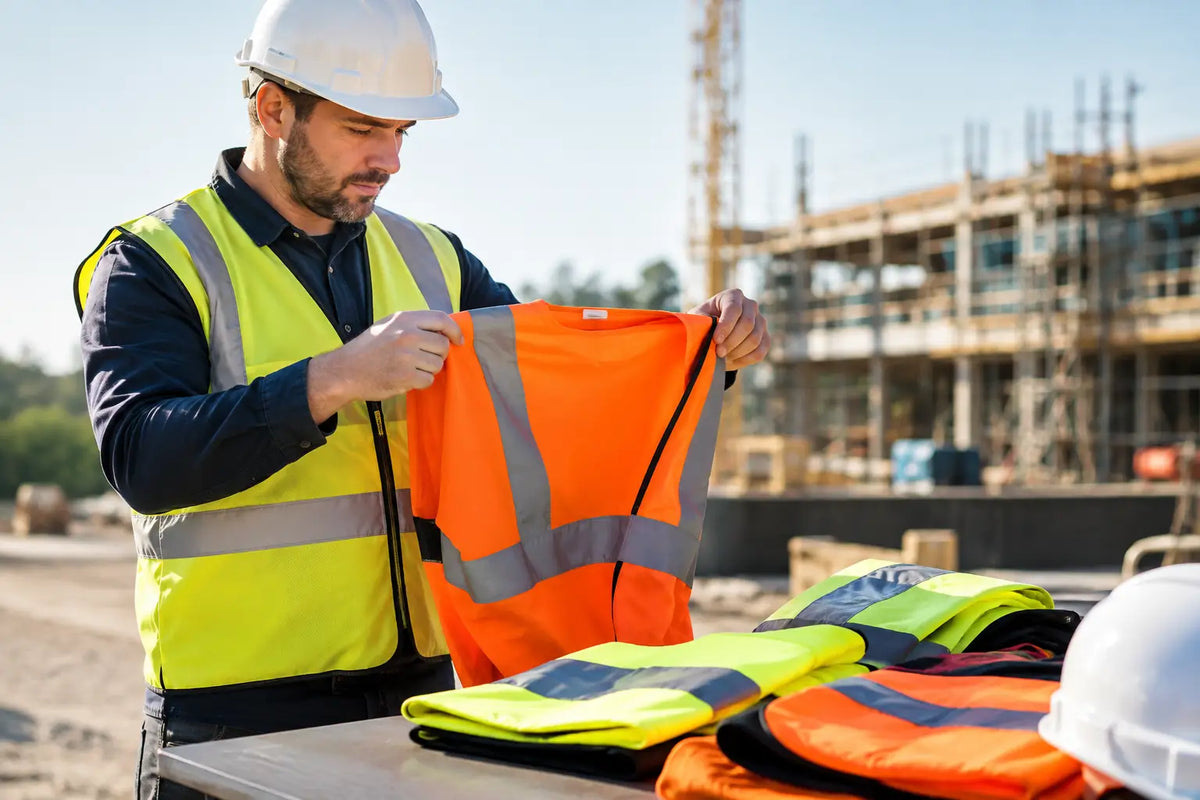
A vest is not just a bright layer thrown over a work shirt. The right safety vests help drivers, equipment operators, coworkers, and emergency personnel identify a worker faster when traffic is moving, machinery is active, or light is fading. The wrong vest can leave a crew under-equipped, out of compliance, overheated, or unable to carry the tools needed for the job.
For crews working roadsides, construction zones, warehouses, utilities, survey sites, and industrial facilities, selection starts with the actual hazard. Visibility needs change with vehicle speed, work zone complexity, weather, background color, shift timing, and the worker's distance from moving equipment. Buy for the work in front of your crew, not just for the lowest price or brightest color.
Start With the Required ANSI Class
ANSI/ISEA 107 sets performance requirements for high-visibility safety apparel. When a job, customer, agency, or company safety plan calls for ANSI-compliant apparel, look for a garment labeled with its ANSI type and performance class. The label matters because it identifies the required amount of fluorescent background material and retroreflective striping.
ANSI Class 2 for Active Work Areas
ANSI Class 2 safety vests are a common choice for workers exposed to traffic, mobile equipment, or busy work zones where visibility is needed but conditions are generally less complex than high-speed roadway work. They are frequently used by construction crews, warehouse teams, airport ground personnel, delivery operations, utility workers, and survey professionals.
A Class 2 vest is often a practical daily option because it provides strong visibility without the added coverage of a Class 3 garment. That can make a difference in hot weather or physically demanding tasks. Still, Class 2 is not automatically appropriate simply because a vest is required. If workers face high-speed traffic, poor weather, night work, or multiple visual distractions, move up to the protection level the task requires.
ANSI Class 3 for Maximum Visibility
ANSI Class 3 garments provide the highest level of conspicuity under the standard. They use more high-visibility material and reflective trim, often with sleeves or extended coverage that helps define the worker's full body shape. This extra recognition matters when drivers must spot people from farther away or when workers operate in dark, rain, snow, heavy traffic, or complex roadside environments.
Road construction, utility restoration, flagging, towing, emergency response support, and overnight maintenance commonly call for Class 3 protection. A Class 3 vest can be the right answer for some roles, but a safety shirt, jacket, or rainwear piece may provide better compliant coverage when conditions are cold or wet. The key is to verify the garment label and ensure any layers worn over it do not cover the reflective material.
Non-ANSI Vests Still Have a Role
Non-ANSI colored vests are useful for identification, event staffing, visitor control, landscaping, low-risk facility tasks, and team organization. Incident command vests can also help establish roles quickly during emergency operations, with colors and titles that identify command, medical, communications, logistics, or safety functions.
These garments are not substitutes for ANSI-rated apparel when workers are exposed to roadway traffic or other hazards requiring compliance. Color helps people recognize a group. ANSI-certified material and reflective design help people see a worker under defined conditions. Those are different jobs.
Match Safety Vests to the Hazard, Not the Job Title
A job title alone does not determine the right vest. A maintenance technician may work inside a well-lit plant one day and beside a loading dock or active road the next. A survey crew may spend hours in open terrain, then move to a shoulder near fast-moving traffic. Review the location and exposure before issuing gear.
Consider the speed and proximity of vehicles, lighting conditions, weather, surrounding colors, and whether workers are focused on a task that limits their awareness. A crew member guiding vehicles, handling a lane closure, or working near reversing equipment needs highly visible apparel even if the assignment is short.
Background contrast matters, too. Fluorescent yellow-green stands out well against many urban and daytime work environments. Fluorescent orange-red may be preferred where yellow-green blends into vegetation, high-visibility equipment, or site conditions. Follow site specifications when they exist, especially on DOT, utility, rail, airport, and public works projects.
Choose Features That Support the Shift
A compliant vest only works if workers can wear it properly for the full shift. Fit, storage, fabric weight, closure type, and weather compatibility influence whether the garment stays on and stays effective.
Mesh safety vests help improve airflow during hot-weather paving, landscaping, warehouse, and construction work. Solid polyester options can offer a more structured feel and may better support pockets, radio loops, or heavier jobsite use. Surveyor vests are especially useful when teams need storage for notebooks, flags, measuring tools, tablets, radios, and personal items without adding a separate belt or bag.
For wet conditions, a high-visibility rain jacket or waterproof outer layer is often more effective than placing a standard vest over rain gear. For winter work, choose ANSI-rated jackets, insulated outerwear, or layering systems that preserve the required visible area. A reflective vest buried under a dark hoodie, coat, or tool harness does not deliver the visibility it was purchased to provide.
Flame-resistant vest options are another specialized category. Workers in electrical utility, oil and gas, welding-adjacent, and other arc-flash or flash-fire environments may need flame-resistant high-visibility apparel. Do not assume every bright vest is flame resistant. Check the garment's stated protection, care instructions, and employer requirements before use.
Fit and Layering Can Affect Compliance
Oversized safety vests may snag on equipment, shift out of place, or leave reflective bands twisted around the body. Vests that are too tight can restrict movement or encourage workers to leave them unfastened. Select sizes based on the layers workers actually wear, especially for seasonal crews.
A vest should close securely, sit flat across the torso, and allow access to required tools without covering reflective striping. If a fall-protection harness, tool belt, backpack, or radio setup is part of the work, test the complete system before issuing it across the crew. In some cases, a high-visibility shirt, jacket, or harness-compatible garment will be more practical than a standard vest.
For branded workwear, custom-logo placement needs the same discipline. A logo can present a coordinated, professional crew, but it should not obscure ANSI-required background material or reflective trim. Keep decoration within approved areas and confirm that the finished garment remains suitable for its labeled classification.
Inspect Vests Before They Become a Problem
High-visibility apparel takes daily abuse. Dirt, asphalt, grease, paint, abrasion, sun exposure, and repeated washing all reduce its effectiveness over time. A vest can still look mostly intact while its fluorescent color has faded or its reflective tape has cracked, peeled, or become permanently soiled.
Build a quick inspection into shift preparation. Look for damaged closures, torn mesh, missing reflective sections, faded material, and pockets or attachments that block visibility. Replace garments that no longer provide the intended coverage or conspicuity. Keeping a small supply of clean replacement vests in fleet vehicles, site trailers, and supervisor kits prevents a worn-out garment from becoming an excuse.
Follow the care label. Harsh chemicals, high heat, and improper laundering can shorten garment life. Washing high-visibility apparel separately from heavily soiled workwear may help prevent contamination that dulls the fabric and reflective trim. If the vest cannot be cleaned adequately, it is time to replace it.
Build a Smarter Crew Vest Program
For safety managers and business owners, the simplest purchasing plan is rarely one vest for every person and every condition. A better program assigns equipment by exposure level and job function. Keep Class 2 vests available for routine active work zones, Class 3 garments for higher-risk roadside and low-light assignments, specialized surveyor or incident-command styles for role-specific needs, and weather-ready layers for changing conditions.
Standardizing a few approved styles makes reordering easier, supports consistent crew appearance, and helps supervisors verify compliance quickly. It also gives workers dependable pocket layouts, sizing, and closures instead of a random mix of gear. When ordering for a team, account for seasonal layers, new hires, visitors, damaged-garment replacements, and spare inventory in vehicles.
Shine Bright Safety helps crews source high-visibility workwear alongside rain gear, safety glasses, utility bags, and traffic-safety equipment, so the visibility plan can match the full jobsite setup rather than stopping at one vest.
The best safety vest is the one that matches the hazard, fits the worker, stays visible through the shift, and is ready before the crew steps into the work zone. Treat visibility as required equipment, inspect it like required equipment, and give every worker a clear chance to be seen.

Leave a comment
This site is protected by hCaptcha and the hCaptcha Privacy Policy and Terms of Service apply.