

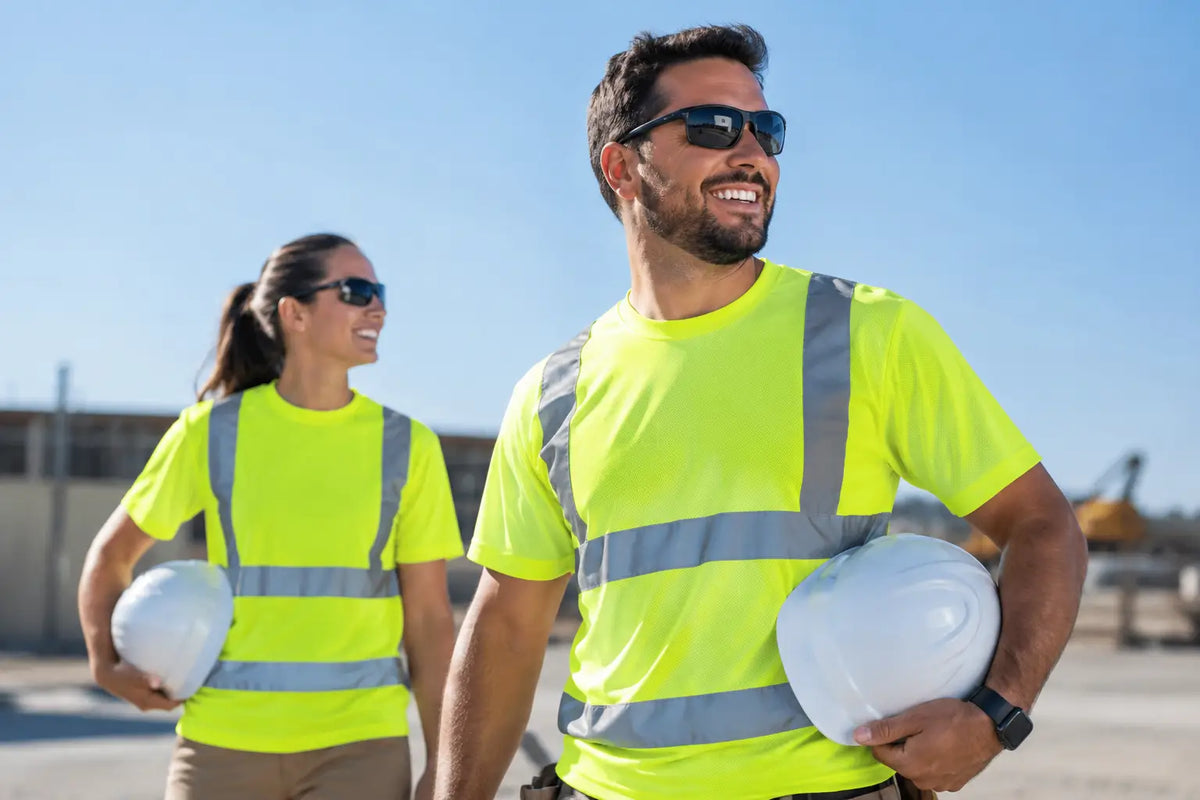
A shirt that traps heat can turn a routine shift into a fatigue problem by midmorning. For crews working pavement, utilities, construction sites, loading yards, and open landscapes, cooling safety shirts for summer help manage heat exposure without sacrificing the high visibility that keeps workers conspicuous around traffic and equipment.
The right shirt will not make a 95-degree day harmless. Heat safety still depends on water, shade, breaks, acclimatization, supervision, and knowing when a worker needs help. But breathable, moisture-managing high-visibility apparel is a practical part of the plan. It helps workers stay drier, move more freely, and remain focused when the temperature climbs.
What Makes a Safety Shirt Feel Cooler?
Cooling workwear is usually about moving heat and moisture instead of holding them against the body. Lightweight performance polyester is common because it pulls perspiration away from the skin and dries faster than a heavy cotton shirt. Mesh panels or a birdseye knit can improve airflow, especially across the back, underarms, and sides where heat builds during physical work.
Fit matters just as much as fabric. A shirt that is too tight restricts airflow and can feel sticky once it is wet. One that is too loose may snag on equipment or shift reflective material out of its intended position. Look for a work-ready fit with room to reach, bend, climb, and layer a base garment when conditions change.
Long sleeves are not automatically hotter. A lightweight, breathable long-sleeve shirt can reduce direct sun exposure on the arms, which may feel more comfortable than repeatedly applying sunscreen during an extended outdoor shift. Short sleeves may be the better choice for workers who need maximum ventilation or frequently move between hot indoor and outdoor areas. The right answer depends on the task, sun exposure, and site requirements.
Moisture Wicking Is Different From Cooling
A moisture-wicking shirt helps sweat spread through the fabric and evaporate. That evaporation can help the body cool itself when air is moving and humidity is manageable. In very humid weather, the benefit may feel less dramatic because sweat cannot evaporate as easily.
Some garments use cooling treatments or fabrics designed to create a cooler hand feel when damp. Those features can be useful, but they should not be the only buying decision. Start with visibility compliance, fabric weight, breathability, and durability. Then compare added cooling features as a comfort upgrade.
Choosing Cooling Safety Shirts for Summer by ANSI Class
For many roadside, construction, utility, and industrial assignments, a high-visibility shirt is more than a bright color. It is part of a required personal protective equipment system. ANSI-compliant garments use specified amounts of fluorescent background material and retroreflective material to create conspicuity in daytime, low-light, and nighttime conditions.
ANSI Class 2 shirts are commonly used where workers need stronger visibility but are not exposed to the highest traffic speeds or most complex backgrounds. They can be a practical choice for survey crews, warehouse yards, delivery operations, and many work zones, depending on the employer's hazard assessment.
ANSI Class 3 shirts provide greater visible material and are intended for higher-risk environments, including work near fast-moving traffic or situations where workers need to be recognized from a longer distance. A Class 3 long-sleeve safety shirt can be especially useful for road crews, utility work, and emergency-related operations where visibility cannot take a back seat to summer comfort.
Do not assume every lime, orange, or reflective shirt is ANSI compliant. Check the product classification and verify that it matches the jobsite requirement. Also remember that an ANSI-rated shirt should be worn as designed. Covering reflective striping with a tool belt, rain shell, backpack, or outer layer can reduce the visibility the garment is meant to provide.
Match the Fabric to the Work, Not Just the Forecast
Summer work happens in different kinds of heat. A landscaping crew in direct sun, a warehouse team working near loading docks, and a road crew standing beside asphalt all face different conditions. Fabric selection should reflect the exposure.
Lightweight polyester performance fabric is often the best all-around starting point. It is quick drying, holds color well, and works well with high-visibility garments. Mesh fabric can offer more ventilation for lower-abrasion tasks, but it may not hold up as well where workers regularly brush against rough concrete, lumber, brush, or equipment.
For tougher use, choose a shirt with reinforced construction and a fabric weight that can handle repeated wear and laundering. The coolest shirt on the first day is not a good value if it snags, stretches out, or loses its professional appearance after a few shifts.
Cotton can feel familiar and soft, but it absorbs sweat and dries slowly. In high heat, that can leave workers feeling heavier and wetter for longer. Cotton blends may work for light-duty settings, but performance synthetics are often more practical for physically demanding outdoor jobs.
Flame-resistant requirements change the decision. Workers in electrical, oil and gas, welding, and other arc flash or flash-fire hazard areas must follow their employer's hazard assessment and applicable PPE requirements. Never trade required FR protection for a lighter non-FR shirt. When FR apparel is required, select a compliant option designed for warm-weather wear and use heat-control practices beyond clothing.
Details That Make Long Shifts Easier
A cooling safety shirt should work with the rest of a worker's gear, not compete with it. Small construction details can make a noticeable difference over a ten-hour day.
A tagless neck or smooth collar reduces irritation when sweat and dust are constant. Flat seams help limit chafing under harness straps or vest layers. A longer back hem can keep the shirt covered during lifting and bending, while a chest pocket may be useful for a pencil, ID, or small notepad. Pockets are not always ideal near rotating equipment, so task-specific rules should come first.
Reflective striping placement also deserves a close look. Contrast trim and segmented reflective tape can support visibility while giving the fabric more flexibility than solid tape. Segmented tape may feel less restrictive and allow better air movement, although its suitability still comes down to the garment's ANSI rating and the demands of the work area.
Color selection is usually driven by site policy and visibility needs. Hi-vis lime is widely used in construction, utilities, and traffic environments. Hi-vis orange is common for roadwork, hunting-related work zones, and other operations where it provides strong contrast against the surroundings. The goal is not simply to wear a bright color. It is to stand out against the jobsite background.
Do Not Let a Cool Shirt Create a Heat-Safety Blind Spot
Comfortable apparel can help workers tolerate summer conditions, but it cannot prevent heat illness on its own. Supervisors should plan demanding tasks around the hottest hours when possible, establish accessible water and rest locations, and watch newer or returning workers as they acclimatize.
Workers should report headache, dizziness, nausea, unusual weakness, confusion, heavy sweating, or hot dry skin immediately. These are not signs to push through. They can signal heat-related illness that needs prompt attention under the site's emergency plan.
The clothing system matters, too. A breathable safety shirt may be covered by a hard hat, gloves, harness, tool belt, respirator, or protective outerwear. Each item can add heat load. Review the full PPE setup before ordering large quantities, especially for crews that move between driving, equipment operation, manual labor, and traffic control.
Care Keeps High Visibility Working
Dirt, oils, concrete dust, and repeated washing can reduce the brightness and reflectivity of safety apparel. Follow the care label rather than using a one-size-fits-all laundry routine. In many cases, washing in cold or warm water with mild detergent and avoiding bleach, fabric softener, and excessive high heat will help preserve garment performance.
Inspect shirts before use. Replace garments with damaged reflective striping, deep stains that cannot be removed, torn mesh, faded fluorescent fabric, or contamination from chemicals and oils. A shirt may still be wearable as a casual work top, but it is no longer dependable high-visibility PPE when its conspicuity has been compromised.
For safety managers, keeping a few spare sizes on hand prevents a bad fit or damaged shirt from becoming a reason to work without the correct garment. Coordinated shirts also make it easier to identify crew members quickly and maintain a professional jobsite appearance. Custom-logo options can support that team presentation without replacing the need for proper ANSI classification.
Summer shifts demand more from workers and from the apparel they wear. Choose high-visibility shirts that fit the job hazard, breathe under pressure, and hold up after repeated use. When the heat is on, staying cool and staying visible should remain part of the same work standard.

Leave a comment
This site is protected by hCaptcha and the hCaptcha Privacy Policy and Terms of Service apply.