

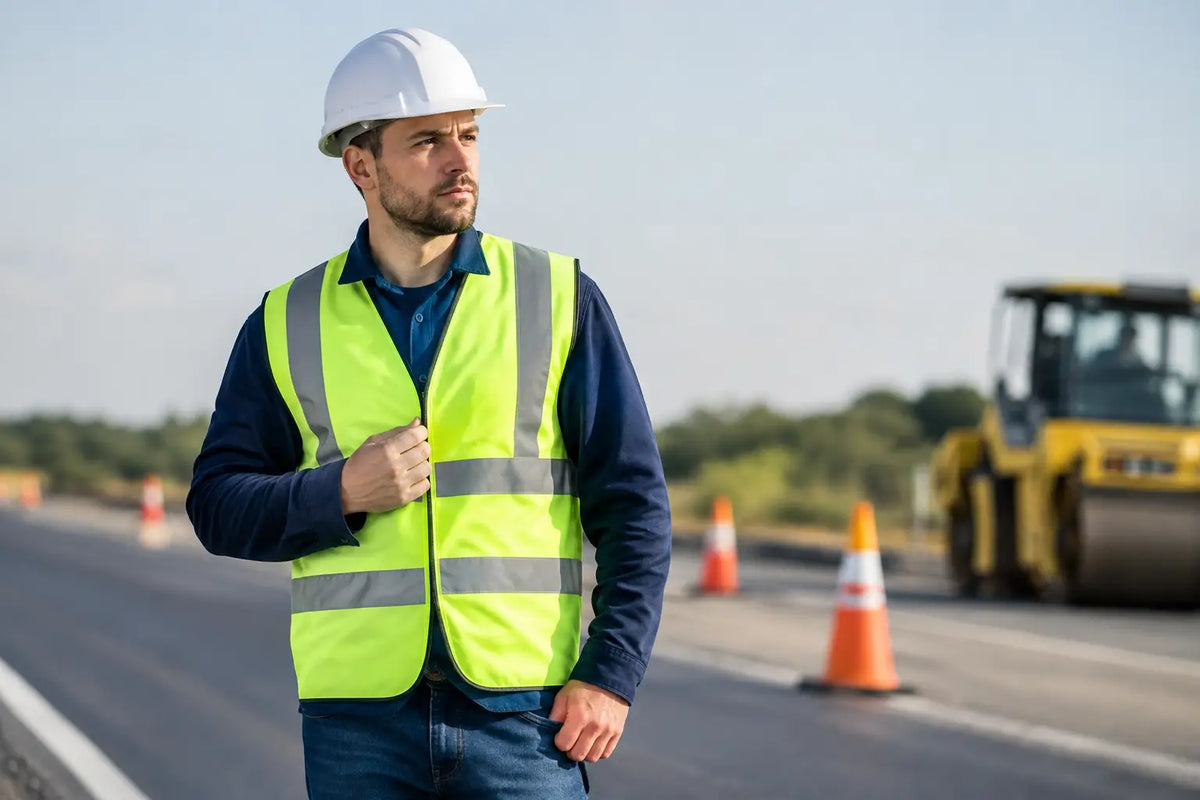
Traffic does not pause for a shoulder crew, a utility repair, or a paving operation. A high visibility vest for roadwork gives drivers, equipment operators, and fellow workers a faster visual read of where a person is standing and moving. That matters at daybreak, in rain, around lane closures, and anywhere attention is split between the work zone and live traffic.
The right vest is not simply the brightest one on the rack. Roadwork crews need the correct ANSI classification, enough reflective material for the assignment, a fit that stays visible over layers, and practical features that support the work instead of getting in the way. Start with the hazard, then choose the garment.
Start With the Roadwork Hazard
Roadway exposure is different from a warehouse aisle or a fenced jobsite. Vehicle speeds may be high, sight lines may be limited, and workers can be close to moving traffic without a physical barrier. Night work, poor weather, heavy equipment, and complex traffic-control setups raise the visibility requirement even further.
Before placing an order for a crew, look at how close workers are to traffic, the typical speed of that traffic, lighting conditions, weather, and whether the worker must focus on tasks that limit awareness of approaching vehicles. A flagger at an active lane closure has a different exposure than a laborer working behind concrete barrier, even if both are on the same project.
Your project specifications, employer safety program, state or local requirements, and the applicable traffic-control plan should drive the final decision. ANSI labels help identify a garment's design and material performance, but the label does not replace a site-specific hazard assessment.
Choose the Correct ANSI Class
For most roadwork applications, ANSI/ISEA 107 Type R apparel is the starting point. Type R is intended for occupational workers exposed to roadway traffic. The performance class then indicates how much high-visibility background material and retroreflective material the garment provides.
ANSI Class 2 for Active Roadway Work
ANSI Class 2 vests are commonly used by road crews, survey personnel, delivery workers, crossing guards, and utility teams where traffic is present and visibility is needed. They offer more conspicuity than Class 1 apparel and can work well for many daytime assignments, controlled work zones, and moderate-speed roadway exposure.
A Class 2 vest can be the right choice when the task needs a lighter, sleeveless layer that workers can wear comfortably through a full shift. It also works well over a T-shirt, long-sleeve work shirt, or light jacket. Still, Class 2 is not automatically enough for every roadway assignment. Darkness, severe weather, fast traffic, and complex work zones may call for more coverage.
ANSI Class 3 for Maximum Conspicuity
ANSI Class 3 garments provide the highest visibility category under the standard. They use greater amounts of fluorescent background fabric and reflective material, and they generally include sleeves. The added visible area helps make a worker recognizable from farther away and through a wider range of viewing angles.
Class 3 is a strong choice for night roadwork, highway maintenance, emergency repairs, flagging near higher-speed traffic, and crews working in rain, fog, or low-light conditions. A Class 3 safety vest or vest-style garment may be ideal when a worker needs visibility without the bulk of a full jacket. For cold or wet weather, a Class 3 jacket, raincoat, or layered outerwear system can provide more consistent coverage.
Do not choose Class 3 just because more is always better. Heat stress, mobility, task demands, and the need to wear fall protection or other PPE all matter. The goal is effective visibility that workers will actually wear correctly for the duration of the job.
Look Beyond the ANSI Label
A compliant label is essential, but daily roadwork puts more demands on a vest than a label can describe. Fabric weight, closure style, pocket layout, sizing, and trim placement affect whether the garment works in the field.
Mesh vests improve airflow and are a practical choice for hot paving jobs, summer utility work, and high-exertion tasks. Solid polyester options may offer a more structured feel and can provide better support for pockets, radios, clipboards, or jobsite paperwork. In cooler weather, choose a vest with room to fit over hoodies and insulated work layers without covering the reflective striping.
A zipper closure generally stays more secure than hook-and-loop when workers are bending, climbing, or moving around equipment. Hook-and-loop closures can be faster to put on and remove, but they should be checked for wear and contamination from dirt, asphalt, and debris. For workers exposed to entanglement hazards, a breakaway design may be appropriate. Match that feature to the task rather than treating it as a universal upgrade.
Make Storage Work for the Crew
Roadworkers often carry more than a pair of gloves. Survey crews may need field books, marking tools, radios, and measuring gear. Utility workers may need meters, tags, phones, and hand tools. Traffic-control personnel may carry permits, instructions, or communication equipment.
Choose pocket layouts based on what workers genuinely carry. Chest pockets keep smaller items accessible, while large lower pockets can help with gloves and paperwork. Clear ID windows are useful for supervisors, inspectors, event staff, and incident-command assignments. Too many pockets, however, can make a vest heavy and create snags. A simple vest is often the better option for paving, flagging, and labor crews that do not need to carry equipment on the garment.
If a crew needs a coordinated appearance, custom-logo high-visibility apparel can identify the contractor while maintaining a professional presentation. Keep logo placement clear of the required fluorescent background and reflective trim. Decoration should support recognition, not reduce conspicuity.
Plan for Weather, Layers, and Specialized Hazards
A vest that works in July may fail the crew in November. For rain, consider high-visibility rainwear with reflective trim instead of relying on a standard mesh vest over a dark waterproof jacket. A covered vest can lose much of the visibility benefit it was selected to provide.
For cold conditions, build the system from the outside in. A high-visibility jacket or Class 3 outer layer should remain visible over insulation. Athletic-cut safety outerwear can help workers move freely while wearing base layers, hoodies, and gloves.
Flame-resistant roadwork apparel requires extra care. When arc flash, flash fire, or utility hazards are present, use garments rated for the applicable hazard and follow the employer's PPE program. Pulling a standard polyester vest over flame-resistant clothing can introduce a melt hazard and may defeat the purpose of the protective layer. Select flame-resistant high-visibility options designed for that exposure instead.
Inspect Vests Before They Become a Problem
High-visibility workwear is equipment, not a one-time purchase. Dust, oil, asphalt residue, fading, torn mesh, and damaged reflective tape all reduce performance. Make vest checks part of shift readiness, especially for crews working nights or rotating between road and equipment assignments.
Replace garments when fluorescent fabric is badly faded or stained, reflective trim is cracked, torn, or peeling, closures no longer hold, or the vest cannot be cleaned enough to stand out against the work environment. Follow the care label. Harsh washing practices and high heat can shorten the life of retroreflective material.
Safety managers can make replacement easier by keeping a small reserve of common sizes on hand. For larger crews, standardizing a few approved models helps simplify ordering, training, and compliance checks. It also prevents workers from arriving at a traffic-exposed assignment with whatever vest happened to be in the truck.
Fit the Vest Into the Full PPE Plan
Visibility is strongest when the whole worker can be seen. Pair the vest with task-appropriate safety glasses, gloves, head protection, rainwear, and footwear. Keep reflective material unobstructed by harness straps, backpacks, tool belts, or outer layers whenever possible.
Brief crews on why the vest matters, where it must be worn, and when conditions require a higher-class garment. Workers are more likely to wear PPE correctly when the selection makes sense for the job, fits comfortably, and holds up to real work.
For roadwork, the right choice is the one that keeps the person visible in the actual conditions they face. Choose the ANSI class, features, and weather protection that match the exposure, then keep that gear clean, intact, and ready at the start of every shift.


Leave a comment
This site is protected by hCaptcha and the hCaptcha Privacy Policy and Terms of Service apply.