


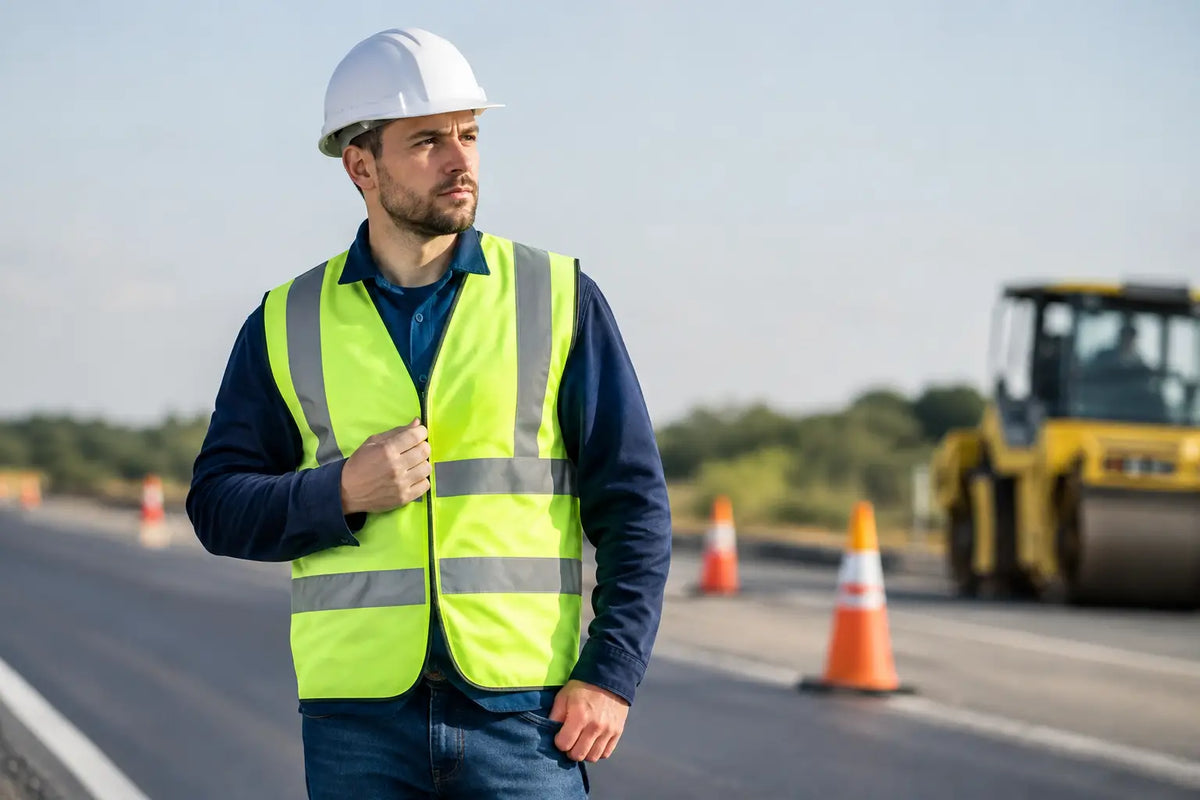
A vest can be clean, bright, and still be the wrong piece of PPE for the job. The best safety vest for construction is the one that matches your exposure to traffic and equipment, meets the required ANSI class, fits over your work layers, and stays visible through the full shift. A low-cost vest that tears, rides up, or gets buried under a jacket does not deliver the protection your crew needs.
Construction work changes by the hour. One crew may be setting forms behind barriers, another may be guiding trucks at a busy site entrance, and another may be working before sunrise beside moving equipment. Start with the work zone, then choose the vest features that support it.
Best Safety Vest for Construction Starts With ANSI Class
For most road-adjacent and heavy-equipment construction work, ANSI/ISEA 107 compliance should be the baseline. ANSI-rated high-visibility apparel is designed around fluorescent background material and retroreflective striping that helps workers stand out in daylight, low light, and vehicle headlights.
ANSI Class 2 vests are often a practical choice for workers operating around equipment or traffic where vehicle speeds are lower and the work environment is controlled. They provide more visible material than a Class 1 garment and are common for general construction, warehouse yards, utility work, and site personnel who need daytime and nighttime conspicuity.
ANSI Class 3 is the stronger choice when workers are exposed to faster traffic, limited sight lines, darkness, bad weather, or complex work zones. Class 3 garments use more high-visibility material and reflective trim, often through sleeves or a higher-coverage design. A Class 3 safety shirt, jacket, or vest-and-sleeve combination can make more sense than a basic vest when visibility risk is high.
Do not choose a class by appearance alone. Read the garment label and follow the jobsite safety plan, contract requirements, and state or local rules. A safety manager may require a specific class, color, or garment type based on the work being performed. For roadway work, ANSI Type R garments are generally intended for occupational use near road traffic. Type P garments may be specified for public-safety tasks, while Type O is for off-road use where traffic exposure is not a primary hazard.
Choose Coverage for the Actual Work Zone
A mesh Class 2 vest can be a smart warm-weather workwear choice, but it is not automatically the right answer for every crew. Think about what workers are doing, what is moving around them, and how often conditions change.
Workers directing deliveries, operating near dump trucks, or walking active haul routes need clear, uninterrupted visibility from multiple angles. Larger reflective striping and a brighter background color help, but the vest also needs to remain fully exposed. If a tool belt, fall-protection harness, rain jacket, or hoodie covers key reflective areas, reassess the complete PPE setup.
For crews working in cool mornings and hot afternoons, layering is usually the deciding factor. A roomy vest that fits over a sweatshirt or light jacket is more useful than a tight vest that only works over a T-shirt. If the outer layer must provide the ANSI rating, select an ANSI-rated jacket or Class 3 outerwear instead of relying on a vest hidden beneath it.
Color selection can also depend on the jobsite. Fluorescent yellow-green is widely used for roadway, construction, and utility environments. Fluorescent orange is common where crews need a distinct visual identity or where hunting-related visibility concerns affect the work area. Either color can be ANSI-compliant when the garment is properly labeled. The better option is the one specified by the site and easiest to distinguish from the surrounding environment.
Fit Is a Safety Feature, Not a Comfort Extra
A construction vest should allow full movement without flapping, snagging, or restricting access to tools. Loose material can catch on equipment, while an undersized vest can pull across the shoulders, shift reflective tape out of position, and discourage workers from wearing it correctly.
Look for adjustable sides when fitting a mixed crew. They make it easier to accommodate seasonal layers and different body types without turning every vest into a special order. Longer cuts can provide useful coverage, but confirm that the hem will not interfere with a harness, tool belt, or seated equipment operation.
Breathability matters in summer. Mesh panels improve airflow and help reduce heat buildup, especially for labor-intensive tasks such as paving, concrete work, demolition, and landscaping. The trade-off is durability. Solid polyester fabrics may hold up better around abrasive surfaces and repeated loading, while mesh is lighter and cooler. Match the fabric to the work rather than assuming one style fits every role.
Pick Pockets That Help, Not Pockets That Hang Up
A basic breakaway vest may be appropriate where entanglement is a concern. A surveyor-style vest with multiple pockets may be better for foremen, inspectors, utility crews, and workers carrying radios, notebooks, flagging supplies, tablets, or measuring tools.
The best storage layout depends on what stays on the worker all day. Zippered pockets help secure small items. Clear ID windows support access control and visitor identification. Radio loops and mic tabs keep communication equipment accessible. Large lower pockets can be useful, but overloaded pockets add weight and can pull the garment out of place.
For crews working around rotating equipment, conveyors, or pinch points, simplify the vest. Avoid unnecessary dangling accessories and follow the site’s rules for breakaway garments. More features are only better when they serve the task without creating a new hazard.
Weather and Specialized Hazards Change the Answer
Rain, cold, arc-flash exposure, and fire hazards require more than a standard polyester vest. A waterproof high-visibility rain jacket may be the right outer layer when a wet vest could become uncomfortable, heavy, or obscured by non-compliant rain gear. For winter work, insulated ANSI outerwear helps keep workers visible without forcing them to layer a non-reflective coat over their vest.
Flame-resistant options deserve careful attention. An FR safety vest can be necessary for certain utility, oil and gas, electrical, or industrial environments, but not every garment labeled FR delivers the same level of protection. Check the garment label, applicable hazard assessment, and your employer’s required performance standard. An FR vest is not a substitute for the arc-rated or flame-resistant clothing required for a specific exposure.
For night work, inspect reflective material closely. Retroreflective striping must be clean and uncovered to perform as intended. Dirt, cement dust, paint, grease, and worn tape can reduce visibility. A vest may still look acceptable in daylight while providing weaker headlight return after dark.
Build a Vest Program, Not a One-Time Purchase
For a contractor or safety manager, standardizing crew vests saves time and avoids compliance gaps. Set a baseline by role: for example, Class 2 for controlled-site labor, Class 3 outerwear for traffic-exposed crews, breakaway styles near entanglement hazards, and surveyor vests for supervisors or inspectors. Then allow for weather layers and task-specific exceptions.
Check sizing before placing a large order. Keep replacement vests available for new hires, damaged gear, and unexpected visitors. If your company uses custom-logo high-visibility apparel, place the decoration where it does not cover reflective material or conflict with the garment’s ANSI configuration. A coordinated crew presentation can support identification on site, but visibility requirements come first.
Inspect vests as part of regular PPE checks. Retire garments with torn fabric, missing closures, heavily soiled fluorescent material, damaged reflective tape, or faded color. Washing instructions matter too. Harsh laundering, excessive heat, and improper chemicals can shorten the life of reflective trim.
The right vest makes a worker easier to see before a driver, operator, or spotter has to search for them. Choose the class your work zone demands, fit it around the way your crew actually works, and keep it clean, visible, and ready for the next shift.


Leave a comment
This site is protected by hCaptcha and the hCaptcha Privacy Policy and Terms of Service apply.