

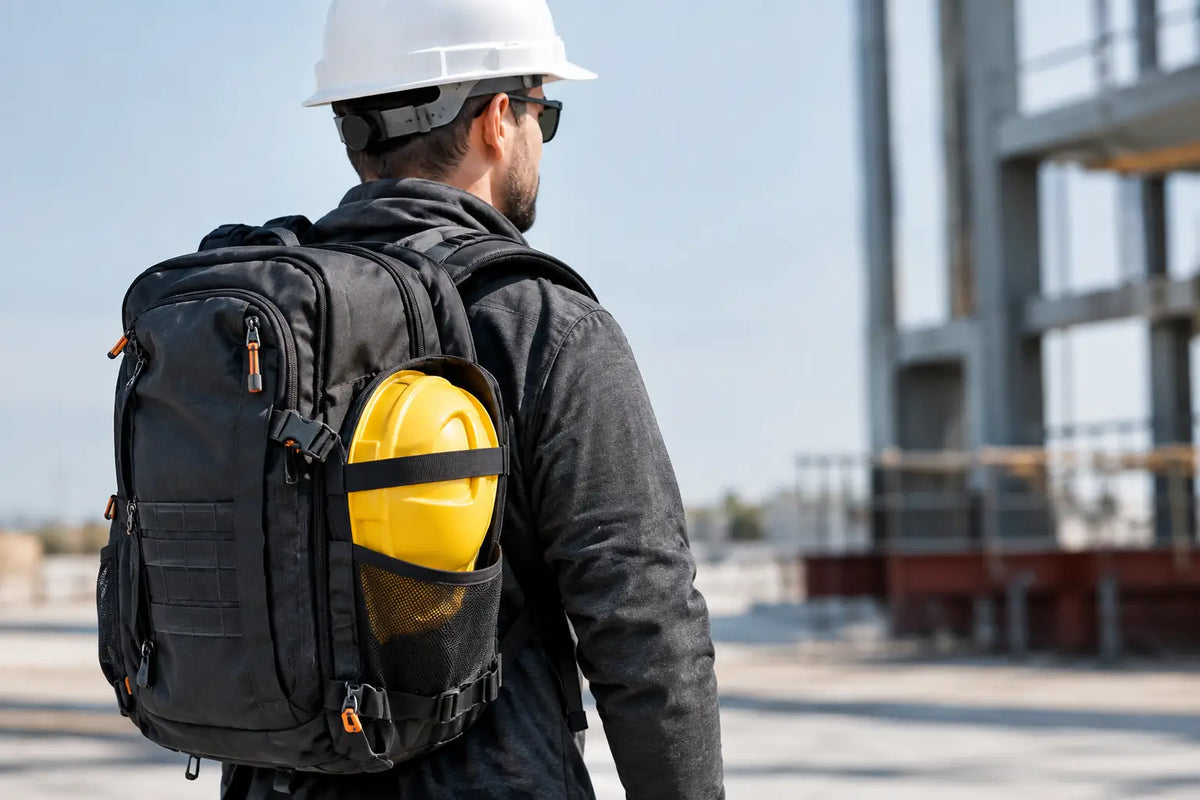
A hard hat backpack solves a problem every field worker recognizes: too much essential gear, not enough hands. When the walk from the truck to the work zone includes uneven ground, ladders, traffic, tools, and changing weather, carrying a helmet under one arm is not a practical plan. The right bag keeps your head protection, high-visibility layers, eyewear, gloves, and daily gear together without turning the start of the shift into a scramble.
For crews in construction, utilities, roadwork, maintenance, surveying, and industrial operations, this is not just a convenience purchase. It is a way to protect PPE, reduce forgotten gear, and keep workers ready to suit up where the work begins.
What a Hard Hat Backpack Should Do
A purpose-built hard hat backpack needs to carry more than a helmet. It should organize the equipment a worker uses before, during, and after the shift while staying comfortable enough for a walk across a large site or from a parking area to a remote work location.
The key difference is the hard hat storage system. Some backpacks use an exterior helmet holder, often with adjustable webbing or elastic retention. Others have a dedicated compartment that encloses the hard hat. Both designs can work, but they serve different conditions.
An exterior carrier provides fast access and can free up interior space for a jacket, lunch, paperwork, or tools. It is a strong option for dry workdays and crews who need to grab their helmet quickly at multiple stops. The trade-off is exposure. Rain, dust, mud, and contact with surrounding surfaces can reach the hard hat more easily.
An enclosed compartment offers better protection during travel and storage. It can be the better choice for workers who keep gear in a truck bed, move through crowded transit areas, or work in wet and dirty conditions. It may add bulk, however, and a large helmet can take up valuable room. Check the stated dimensions instead of assuming every bag fits every hard hat style.
Start With the Worksite, Not the Bag
The best bag depends on what happens between the vehicle and the work area. A utility worker walking long distances over rough terrain has different needs than a warehouse lead moving from office to floor, and a roadside crew member has different exposure than a survey team working in open fields.
For roadside and traffic-control work, look for a bag with high-visibility color panels or reflective trim. A backpack is not a substitute for ANSI Class 2 or ANSI Class 3 apparel, and it should never replace required high-visibility PPE. Still, a visible bag can add awareness while a worker is approaching the site, unloading equipment, or moving around a staging area.
For construction and industrial work, durability usually matters more than extra pockets. Reinforced bottom panels, abrasion-resistant fabric, strong zippers, and heavy-duty stitching help a bag hold up against concrete, gravel, metal edges, and frequent vehicle loading. A low-cost bag that splits at the shoulder strap can leave expensive PPE and daily essentials on the ground.
For survey, inspection, maintenance, and utility crews, organization often wins. These jobs can require paperwork, tablets, radios, chargers, marking supplies, eyewear, gloves, and rain gear in addition to head protection. Separate compartments prevent small items from settling at the bottom of one large cavity. A padded device sleeve is useful if a worker carries digital plans or field documentation, but only if it does not interfere with the hard hat storage area.
Features That Matter on a Real Shift
A hard hat backpack earns its place when each feature addresses a jobsite need. Start with capacity, but do not automatically choose the biggest model. Oversized bags encourage workers to overpack, become awkward in tight spaces, and can catch on equipment or vehicle interiors. Choose enough room for the gear used on a normal shift, plus a little space for weather changes.
Shoulder straps deserve close attention. Wide, padded straps distribute weight better than thin webbing, especially when the load includes water, tools, and a helmet. An adjustable sternum strap can reduce shifting while walking, and a padded back panel adds comfort during long carries. For heavier loads, a waist belt may help, though it can be unnecessary for workers who only carry the bag from vehicle to work area.
Weather resistance is another practical decision. Water-resistant fabric helps during light rain and protects gear from wet ground or a damp truck bed. A fully waterproof bag is more specialized and may cost more, but it can be worth considering for utility, marine, outdoor maintenance, and extended rainy-season work. Remember that water-resistant fabric does not guarantee dry contents if the zipper and seams are not protected.
A good bag should also make critical items easy to find. Eye protection should not be loose beside tools. Gloves should have a designated pocket or be packed where they will stay clean and dry. A separate area for wet rainwear or dirty garments can keep the rest of the load in better shape. If a bag has a small exterior pocket, reserve it for frequently used items such as a badge, key, flashlight, or hand sanitizer.
Use this quick feature check before selecting a bag:
- A secure hard hat holder or compartment sized for the helmet you actually wear
- Padded, adjustable shoulder straps that stay comfortable under a full load
- Durable base material and dependable zippers for daily jobsite handling
- Separate storage for eyewear, gloves, rainwear, electronics, and personal items
- Water resistance and visible accents appropriate for the work environment
Pack PPE So It Is Ready to Use
Organization affects more than convenience. When workers can find their gear immediately, they are less likely to skip steps or leave needed protection in the truck. Pack the bag in the same order each day so the routine becomes automatic.
Keep the hard hat in its designated carrier and inspect it before use. Do not use the backpack compartment as a place to bury a damaged helmet until later. If the shell has taken a significant impact, has cracks, shows UV damage, or has a compromised suspension system, follow employer policy and the manufacturer’s replacement guidance.
Store safety glasses in a protective case or dedicated soft pocket. Lenses can scratch quickly when they ride against keys, fasteners, or tools, and scratched eyewear can reduce visibility when workers need it most. Keep clean gloves separate from used gloves whenever possible. For wet or contaminated gear, a removable pouch or sealed bag can prevent moisture and debris from spreading through the pack.
High-visibility vests, shirts, and rainwear should be folded rather than crammed into the bottom. This helps preserve reflective material and makes it easier to spot damage, staining, or worn closures before the next shift. If workers change layers through the day, leave enough room to stow a jacket or rain shell safely rather than hanging it from equipment or leaving it exposed in a work vehicle.
Do Not Let Storage Create a Safety Problem
A backpack is useful only when it is used with jobsite awareness. Never wear a loaded backpack where it can snag on rotating equipment, create clearance issues in confined areas, or interfere with fall protection. Follow site rules around ladders, aerial lifts, scaffold access, and restricted industrial zones. In some situations, the right move is to set the bag in a designated clean, dry area and carry only the PPE required for the task.
Avoid attaching heavy tools to exterior loops unless the bag is designed for that load. A swinging hammer, tape measure, or tool pouch can throw off balance and catch on handrails. The same goes for hanging a hard hat loosely from a single strap. If the bag includes a helmet retention system, use all of its straps or clips as intended.
For supervisors and purchasing teams, standardizing a gear bag can simplify daily readiness. A consistent layout helps new employees learn where equipment belongs, supports faster truck checks, and gives crews a practical place to carry company-issued PPE. Pairing the bag with high-visibility apparel, safety glasses, rain gear, and task-specific protection creates a more dependable grab-and-go setup.
Keep the Bag Working Between Shifts
A hard hat backpack needs occasional attention just like any other piece of jobsite gear. Empty it regularly, shake out dirt, wipe down the interior, and let wet items dry before packing them away. Check zipper pulls, strap stitching, buckles, and the helmet carrier for wear. Small problems are easier to address before a strap fails during a walk across the site.
The best bag is the one that makes PPE easier to carry, protect, and use every day. Choose for the conditions your crew faces, pack it with purpose, and keep it ready at the door so the next shift starts prepared.



Leave a comment
This site is protected by hCaptcha and the hCaptcha Privacy Policy and Terms of Service apply.