

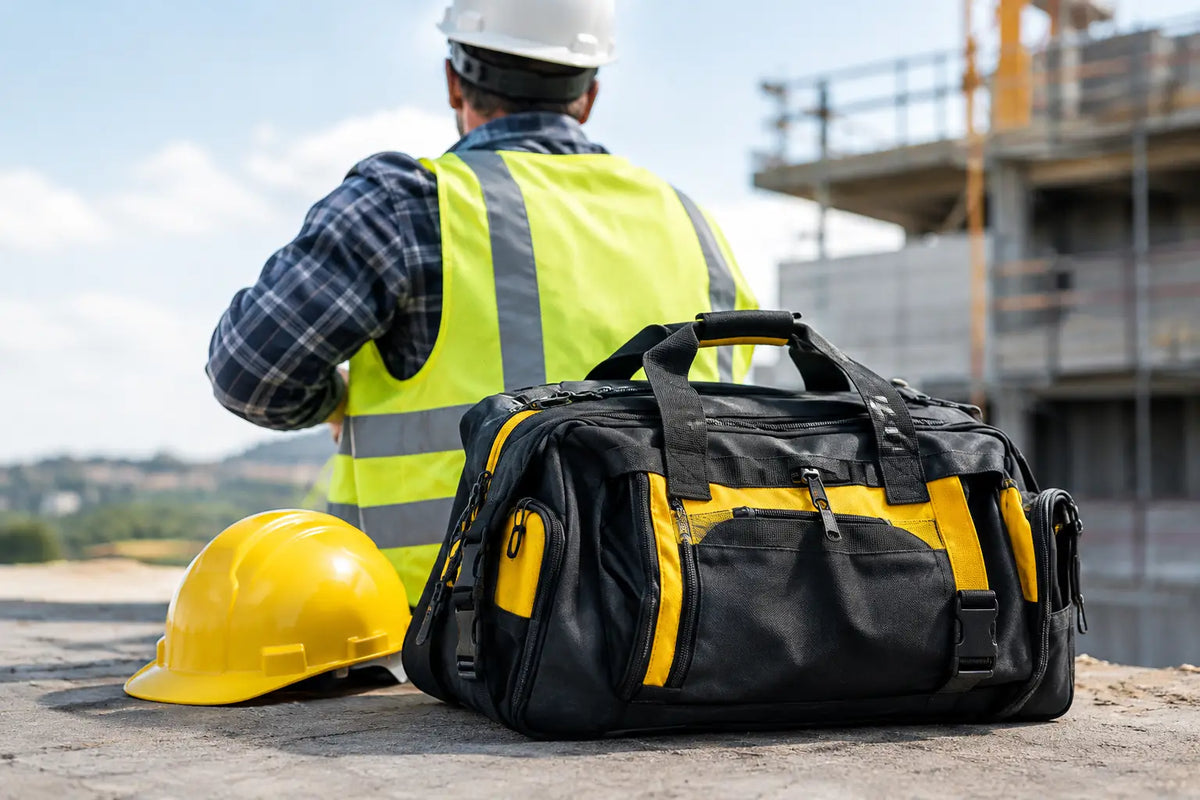
A gear bag earns its keep before the first tool comes out. It keeps safety glasses from getting crushed under a drill, separates wet rainwear from dry layers, and prevents a worker from showing up without gloves, hearing protection, or a clean ANSI vest. The right gear bags for construction workers reduce the daily scramble at the truck, trailer, locker, or jobsite gate.
For a single worker, the best bag is usually the one that matches the load and commute. For a contractor or safety manager, the better question is whether the bag helps crews protect, transport, and quickly account for required equipment. Capacity matters, but so do pocket layout, weather resistance, carry comfort, and how the bag holds up after months on concrete, gravel, and truck beds.
What Construction Gear Bags Need to Handle
Construction equipment is rarely clean, light, or all the same shape. A worker may carry a hard hat, work boots, gloves, eye protection, high-visibility outerwear, a rain jacket, hydration, paperwork, chargers, and hand tools. A bag that works for a light maintenance shift may be too small for a road crew working through changing weather.
Start with the actual kit, not the product photo. Lay out what needs to travel in the bag on a normal shift, then add the gear required for rain, cold mornings, night work, or site-specific PPE. That gives you a realistic size target and shows where separation is necessary.
A good construction bag should also tolerate rough handling. Look for heavy-duty fabric, reinforced stitching, protected seams, and a base that will not soak through immediately when set on wet pavement. Weather-resistant material is useful, but it is not the same as a fully waterproof bag. If crews regularly work in sustained rain or transport gear in an open truck bed, a waterproof duffel or dry-bag design may be the better call.
Choose the Right Type of Gear Bag
Duffel bags for full-shift equipment
A large duffel is the practical choice for workers who carry clothing, PPE, and personal items every day. Its wide opening makes it easy to pack bulky rainwear, a hoodie, gloves, and high-visibility layers without folding everything into a tight compartment. It is also a strong option for crews that need a simple grab-and-go bag for changing locations.
The trade-off is organization. One big compartment can become a mixed pile of wet gloves, clean shirts, and loose safety glasses. Choose a duffel with exterior zip pockets or interior dividers when workers need fast access to small items. Separate boot storage is especially useful on muddy jobsites.
Backpacks for hands-free movement
A backpack works well when workers walk long distances from parking areas, move through large facilities, climb stairs, or carry personal PPE between work zones. Padded shoulder straps distribute weight better than a single duffel handle, and multiple compartments make it easier to keep eyewear, documents, electronics, and small tools in place.
Backpacks have limits. They are not ideal for carrying a large hard hat, heavy power tools, or a full change of winter workwear. They work best for lighter daily kits, inspectors, survey crews, supervisors, maintenance staff, and workers who need mobility more than maximum volume.
Tool bags and totes for organized access
Open-top tool bags and structured totes are built for access. They let a worker see hand tools quickly rather than digging through a duffel. Rigid bottoms help the bag stay upright, while reinforced handles are designed for repeated lifting.
These bags are a good fit for electricians, maintenance teams, carpenters, and service technicians, but they are not a substitute for a PPE bag. Open designs expose contents to rain, dust, and theft, and they do little to protect extra clothing or high-visibility rain gear. Many workers get the best result by pairing a tool tote with a separate personal gear bag.
Rolling bags for heavy loads
When the load includes equipment, boots, spare layers, and tools, wheels can save a worker's shoulders. Rolling gear bags are useful for large sites, airports, industrial plants, and crews moving from a parking area to a distant work zone. They also make sense for traveling contractors who need to keep equipment together.
Check the wheel and handle design before buying. Small wheels struggle on gravel, rebar, uneven concrete, and mud. A rolling bag is most useful when workers will actually travel on smoother ground for part of the route. For rough terrain, strong carry handles and durable shoulder straps still matter.
Features That Protect Gear and Save Time
The best features are the ones that remove a daily problem. A vented compartment keeps sweat-soaked shirts, gloves, and boots from sitting against clean PPE. A hard-sided or padded pocket protects safety glasses, radios, and phones. Bright interior lining makes small items easier to find before sunrise or after dark.
For construction crews, pay close attention to these practical details:
- A reinforced, water-resistant base for wet ground, truck beds, and shop floors.
- Wide zippers and pull tabs that are easier to use with work gloves.
- Separate compartments for boots, wet rainwear, and clean high-visibility apparel.
- Padded straps or handles for long walks and heavy loads.
- Exterior pockets for quick-access items such as gloves, safety glasses, earplugs, and ID badges.
- Reflective accents or high-visibility color when the bag is carried near traffic or in low-light areas.
Size the Bag for the Work, Not the Wish List
A compact bag is easier to carry and less likely to collect unnecessary gear. It is a smart choice for workers who keep tools in a gang box and only need to transport PPE, lunch, and an extra layer. A larger bag is better for workers who travel job to job, work outdoors across seasons, or must bring their own boots, rainwear, and tools.
Avoid buying oversized bags just because they offer more room. A half-full bag allows hard items to shift around, which can damage safety glasses and make the load awkward. On the other hand, a bag packed to its zipper every day usually wears out early and makes workers leave essential equipment behind. Leave enough room for a weather layer and one jobsite-specific item beyond the usual kit.
For team purchasing, standardizing on one or two bag sizes can simplify ordering and inventory. A smaller backpack-style option may suit supervisors and survey personnel, while a larger duffel or rolling bag supports field crews with more PPE. This approach gives workers practical choices without creating a dozen different replacement needs.
Build a Better Daily Gear Routine
A bag only improves readiness when workers restock it. At the end of a shift, remove wet clothing, wipe down safety glasses, check gloves for wear, and recharge radios or lights. Keeping damaged items in the bag until the next morning is how small shortages become jobsite delays.
Safety managers can make this easier by setting a basic bag standard: required PPE, a clean high-visibility layer, weather protection when conditions call for it, and a designated place for documentation or communication equipment. For branded crew programs, a bag paired with custom-logo visibility apparel can also help teams arrive organized and recognizable without turning required PPE into an afterthought.
Shine Bright Safety focuses on the equipment workers rely on shift after shift, from high-visibility apparel to jobsite utility gear. When selecting bags, prioritize the conditions your crew faces most often, then choose storage that keeps the essentials protected, visible, and ready to grab. A bag that makes the morning easier is more likely to be packed correctly before the next shift starts.


Leave a comment
This site is protected by hCaptcha and the hCaptcha Privacy Policy and Terms of Service apply.