

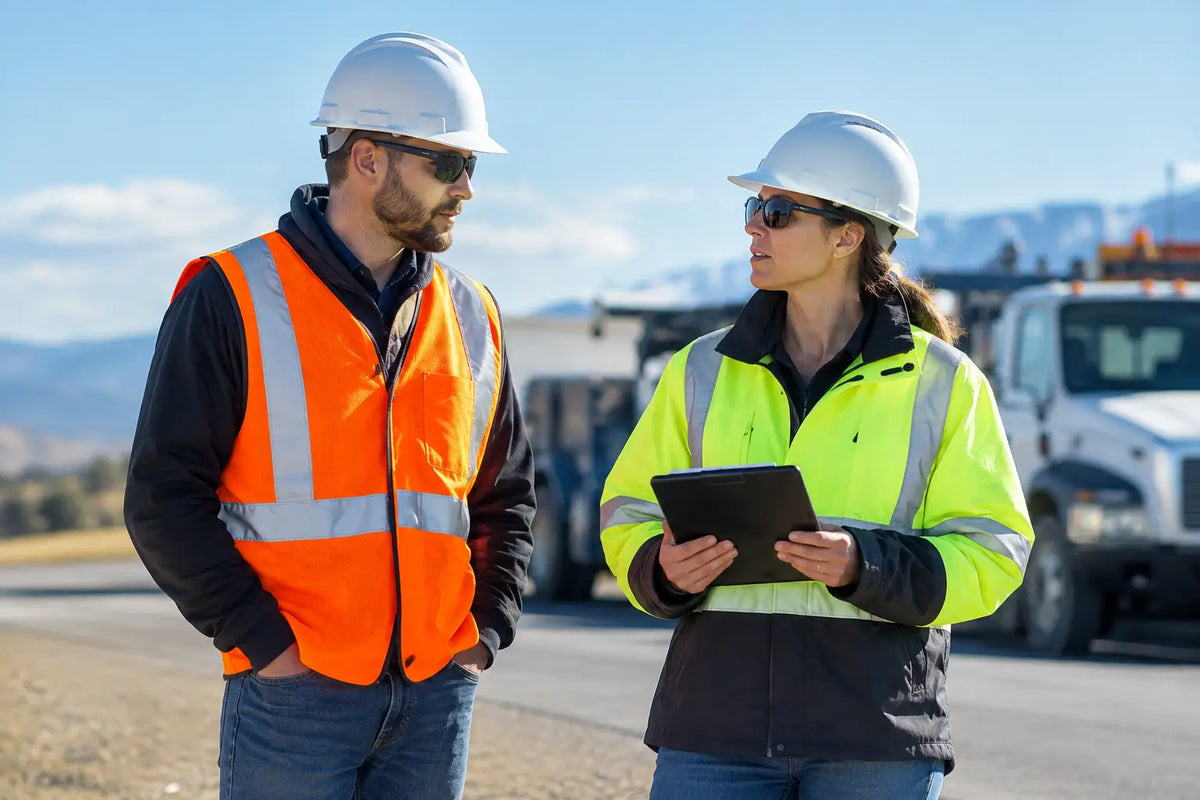
A worker unloading materials beside a busy access road has a different visibility risk than a flagger standing near 55 mph traffic at dusk. That is the practical question behind ANSI Class Two Versus Three workwear: not which garment looks brighter on the rack, but which one gives drivers, equipment operators, and coworkers enough time to see and react.
Both classes are built for professional visibility. The right choice depends on vehicle speed, worker exposure, weather, available daylight, task complexity, and the rules governing the jobsite. Start with the hazard, then select the garment class that matches it.
ANSI Class Two Versus Three at a Glance
ANSI/ISEA 107 sets minimum design and material requirements for high-visibility safety apparel. Class 2 and Class 3 garments use fluorescent background material for daytime conspicuity and retroreflective material to return light toward its source in low-light conditions. The higher class does not simply mean "better" in every setting. It means more visible material and more coverage for higher-risk work environments.
| Feature | ANSI Class 2 | ANSI Class 3 |
|---|---:|---:|
| Minimum background material | 775 square inches | 1,240 square inches |
| Minimum retroreflective material | 201 square inches | 310 square inches |
| Typical garment | Vest, safety shirt, short-sleeve shirt | Jacket, long-sleeve shirt, rainwear, coverall |
| Best fit | Moderate traffic and active work zones | High-speed traffic, low light, severe weather |
Class 2 is commonly available as a vest, which makes it a practical option for crews who need to layer over standard workwear. Class 3 garments provide greater body coverage and generally include sleeves with retroreflective banding. That added movement recognition matters when a worker is turning, signaling, carrying tools, or walking through a complex work zone.
The garment label is the deciding document. Look for the ANSI/ISEA 107 marking and the garment's stated performance class. A fluorescent shirt or vest is not automatically ANSI compliant just because it is bright yellow or orange.
When ANSI Class 2 Is the Right Call
ANSI Class 2 apparel is designed for workers who need clear visibility but face a more controlled exposure level than crews working alongside high-speed traffic. It is a common fit for construction, utility work, surveying, warehouse yards, airport ground operations, delivery areas, landscaping, and roadside tasks where traffic generally moves at lower speeds.
A Class 2 vest can be a smart, efficient choice when workers are separated from traffic by cones, barriers, parked equipment, or a defined work area. It also works well for daytime crews operating around moving forklifts, loaders, trucks, and other equipment where operators need to identify people quickly.
That does not mean Class 2 is a casual option. A well-fitted ANSI Class 2 vest gives a crew compliant visibility without adding the bulk of a jacket. For warm-weather work, mesh construction can improve airflow. For surveyors, inspectors, and utility personnel, pockets, radio tabs, mic loops, and reinforced storage can make the vest useful through an entire shift rather than something workers avoid wearing.
Still, a Class 2 vest has limits. A vest covers the torso but leaves the arms and much of the body in non-reflective clothing. If the job begins before sunrise, continues after dark, or places workers close to fast-moving public traffic, that limited coverage may not provide the recognition distance the situation demands.
When Class 3 Visibility Is Worth the Extra Coverage
ANSI Class 3 is built for the highest visibility needs. It is often the appropriate choice when workers are exposed to traffic moving faster than 50 mph, when a task is near a roadway, or when darkness, rain, fog, snow, or visual clutter makes workers harder to recognize.
Roadway construction, traffic control, emergency response, towing and recovery, utility restoration, nighttime maintenance, and incident command are common Class 3 applications. In these environments, a driver may have little time to process what is ahead, especially when headlights reflect off wet pavement or surrounding signs compete for attention.
The extra material in a Class 3 jacket, shirt, or rain garment does more than create a larger fluorescent area. Reflective striping across the sleeves and body helps define the human form. Drivers and equipment operators can more readily identify movement as a person rather than a sign, cone, or piece of equipment.
Class 3 also solves a common cold-weather problem. Crews may start a shift in compliant vests, then put a dark hoodie or jacket over the top when temperatures drop. Visibility is lost at the exact time conditions may be getting darker. A Class 3 insulated jacket, waterproof shell, or high-visibility rain suit keeps the outermost layer compliant and visible.
There is a trade-off. Class 3 garments may cost more and can feel warmer or more restrictive in hot conditions. For a worker inside a controlled warehouse all day, that additional coverage may not be necessary. But for an employee stepping into a truck yard, crossing vehicle lanes, or responding to a roadside event, the higher class can be the more practical standard.
Match the Garment to the Whole Work Environment
Do not select a class based only on posted speed limits. Assess what workers actually encounter. A 35 mph road can still create a high-risk situation if there are curves, poor lighting, heavy rain, distracted drivers, narrow shoulders, or frequent backing vehicles. A lower-speed industrial yard can create similar exposure when large equipment has blind spots and workers move between trailers.
The work itself also changes the answer. A stationary survey crew positioned behind channelizing devices may have a different requirement than a worker walking the shoulder to inspect assets. A daytime utility crew may need Class 2 for routine service work, while the same team needs Class 3 rainwear for storm restoration after dark.
Use these factors together when setting your crew standard:
- Traffic and equipment speed, volume, direction, and stopping distance
- Distance between workers and vehicle paths
- Daylight, weather, shadows, glare, and nighttime exposure
- Whether workers are stationary, walking, flagging, climbing, or handling loads
- Jobsite rules, contract requirements, and state or agency specifications
Build a Layering System That Stays Compliant
High-visibility apparel works best when it is planned as a system. A Class 2 vest may be sufficient over a work shirt during a warm, controlled daytime task. Once rain begins or the temperature drops, the outer layer needs to preserve the required visibility. Pulling a dark raincoat over a compliant vest defeats the purpose.
For crews who work through changing conditions, consider pairing a breathable Class 2 vest with ANSI Class 3 rainwear or a Class 3 jacket. This gives workers options without forcing them to choose between weather protection and conspicuity. Moisture-wicking safety shirts can support warm-weather comfort, while insulated high-visibility outerwear supports cold, wet, and overnight work.
Fit matters as much as class. A garment that is too loose can snag on equipment or shift so reflective bands are obscured. One that is too tight may limit movement and discourage use. Make sure the selected garment fits over expected layers, allows workers to reach and bend, and leaves reflective material visible rather than covered by harnesses, tools, backpacks, or outer clothing.
Keep ANSI Gear Ready for the Road
ANSI-rated apparel needs routine inspection. Dirt, grease, paint, fading, torn mesh, missing reflective tape, and heavy wear can reduce a garment's practical visibility. Follow the care instructions on the label, avoid covering reflective areas with decals or patches, and replace garments that no longer present a clean, recognizable high-visibility profile.
For purchasing teams, consistency helps. Standardizing colors, classes, and outerwear options makes it easier for supervisors to confirm compliance at the start of a shift. Custom-logo decoration can support crew identification, but it should be placed without blocking the garment's required background or retroreflective material.
Shine Bright Safety carries ANSI Class 2 and Class 3 options for crews that need vests, safety shirts, jackets, and weather-ready outerwear. Select the class for the exposure, build for the season, and keep the visible layer on the outside where it can do its job.
When a worker steps near traffic or equipment, visibility should never be a last-minute decision. Put the right class within reach before the shift starts, and make conspicuity part of every crew's standard equipment.


Leave a comment
This site is protected by hCaptcha and the hCaptcha Privacy Policy and Terms of Service apply.