

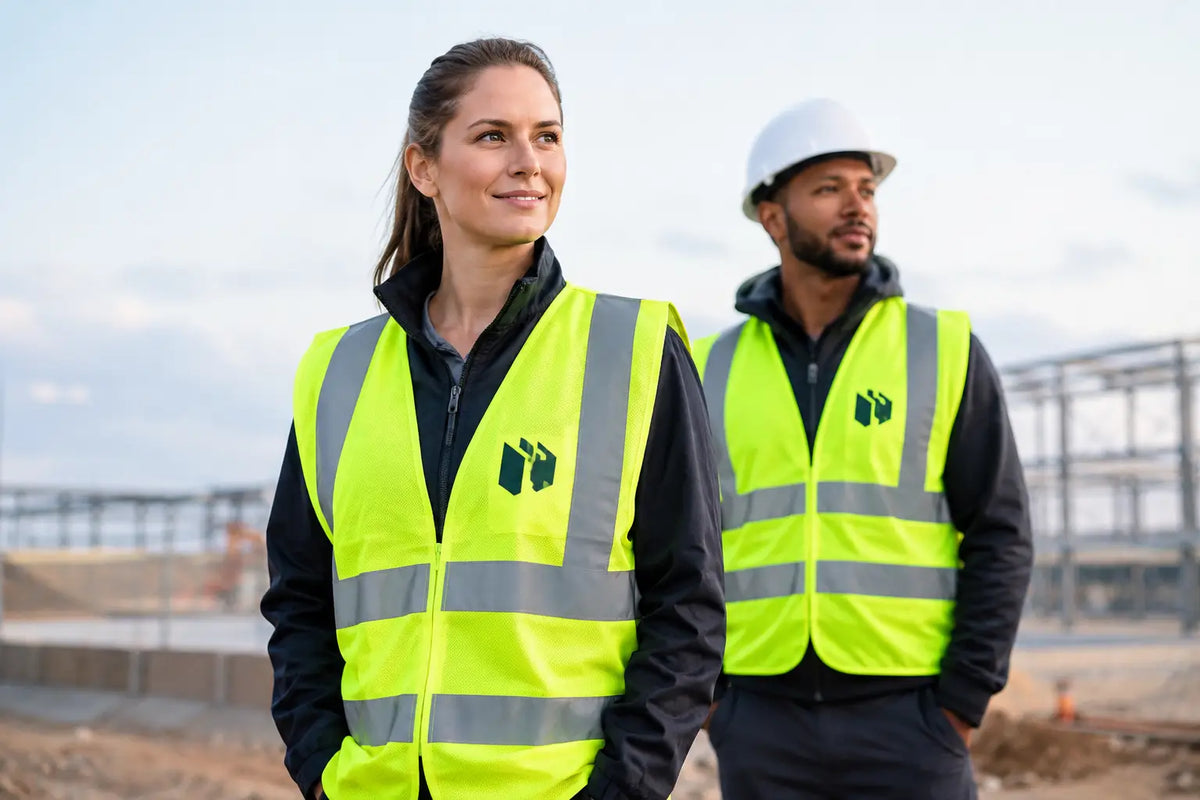
A vest does more than meet a dress code when crews work around traffic, forklifts, heavy equipment, or low-light conditions. Custom logo safety vests make the person wearing them easier to identify while keeping high-visibility protection front and center. For contractors, safety managers, and fleet supervisors, that means a more organized crew, a sharper public-facing presence, and PPE that works harder every shift.
The key is getting the order right. A logo should support the vest's job, not interfere with its visibility, reflective material, or ANSI classification.
Start With the Work Zone, Not the Logo
The best custom vest starts with the hazard assessment. Before choosing a vest color, imprint location, or decoration method, consider where and when the crew works. A warehouse team operating around powered industrial trucks has different needs than a roadside utility crew working overnight.
For many workers exposed to moving vehicles or equipment, ANSI/ISEA 107 high-visibility apparel is the baseline. ANSI Class 2 vests are commonly used where traffic speeds and work conditions call for added conspicuity. ANSI Class 3 garments provide greater visible background material and reflective coverage for higher-risk settings, poor weather, or low-light work. Project specifications, employer policy, and the job hazard analysis should determine the required class.
Not every branded vest needs an ANSI rating. Color-visibility vests can work well for event staff, parking teams, warehouse visitors, landscaping crews, and site personnel in lower-risk environments. They still help identify the team, but they should not be substituted for ANSI-compliant apparel where a higher level of visibility is required.
Keep ANSI Compliance Intact
A vest's ANSI classification applies to the finished garment. Adding a large dark logo over fluorescent background fabric or retroreflective striping can reduce the vest's effective visible area. That can affect compliance, especially when the original garment has only enough qualifying material to meet its listed class.
A practical decoration plan leaves reflective tape clear and places the logo where it will not cover required background material. Small left-chest logos, upper-back marks, and limited text often work well, but placement depends on the vest design and the size of the artwork. Always confirm the proposed decoration with the supplier before approving production.
Choose a Vest Built for the Job
A logo is only one part of the order. The vest still needs to fit the work, the weather, and the tools carried during a shift.
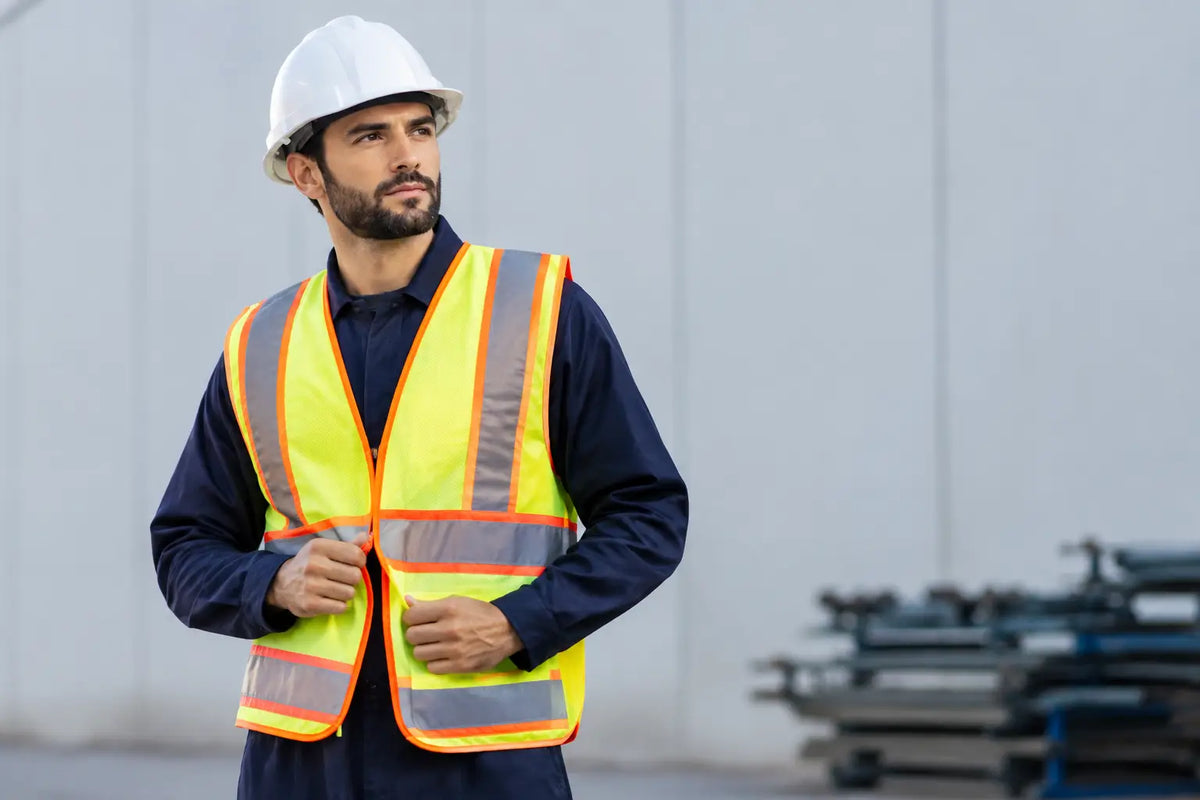
Mesh safety vests are a strong choice for hot weather, indoor operations, and active work where airflow matters. Solid polyester styles offer more structure and can provide a better surface for some decoration methods. Surveyor vests add pockets, radio loops, mic tabs, and storage for crews carrying field books, paint, flagging, tablets, or small instruments. For public safety and incident command, color-coded vests can help establish roles quickly during a response.
Consider how the vest will be used with other PPE. Workers may need room for a hard hat, fall-protection harness, rain jacket, hearing protection, gloves, or a winter layer. A vest that fits perfectly over a T-shirt but binds over a hoodie will often end up unzipped, worn incorrectly, or left in the truck.
Flame-resistant vest options require additional care. If the worksite requires FR apparel, confirm that both the vest and any decoration process are appropriate for the applicable hazard and program requirements. Standard transfers or patches may not be suitable for every FR application.
Pick the Right Decoration Method
There is no single best way to add a logo. The right method depends on the artwork, number of colors, order size, vest material, and the conditions the garment will face.
Screen printing is often a practical choice for simple, bold artwork and larger crew orders. It can create a clear logo that reads well at a distance, especially on the back of a vest. Fine details, gradients, and very small type may not reproduce as cleanly, so simplify artwork when possible.
Heat-applied graphics can suit detailed designs and smaller runs, depending on the material and print process. They can produce crisp color, but the finished result should be evaluated for flexibility, wash durability, and placement. A thick graphic across a highly breathable mesh panel may change how the vest feels during hot work.
Embroidery gives a traditional, raised finish, but it is not automatically the best option for safety vests. Dense stitching can pucker lightweight mesh and may add unnecessary weight or stiffness. It also requires a backing material, which can reduce breathability. Embroidery may make sense on a structured solid-fabric vest, but printed decoration is often a better fit for lightweight high-visibility apparel.
For any method, submit clean artwork. Vector files are preferred for logos with sharp lines and scalable text. If only a raster image is available, use the highest-resolution version possible. A blurry logo file does not become clean simply because it is printed larger.
Design for Fast Recognition
Safety vest branding should be readable, not decorative for decoration's sake. Crews need identification that works when they are moving, bending, loading equipment, or standing across a jobsite.
Keep the design simple. A company name, recognizable logo mark, and short department or crew identifier are usually enough. Avoid cramming phone numbers, web addresses, service lists, and multiple slogans onto the back panel. Small text disappears at a distance and can turn a clean vest into visual clutter.
Color contrast matters, but it has limits on fluorescent fabric. Dark navy, black, and deep green often stand out on fluorescent yellow-green, while a white mark may show better on certain orange garments. The artwork should be reviewed against the actual vest color, not only on a computer screen. A proof helps catch poor contrast, oversized decoration, and placement conflicts before the order goes into production.
For multi-team operations, consistent logo placement can create order without making every vest identical. A company logo on the chest and back can remain standard, while vest color or a small role label distinguishes supervisors, visitors, traffic control, survey personnel, or emergency response staff.
Order Enough for the Real Workday
Safety vests get dirty, snagged, washed, and exposed to sun, rain, fuel, dust, and abrasion. Ordering one branded vest per employee may look efficient on paper, but it leaves no room for laundering, replacements, seasonal layers, or new hires.
Plan for spare sizes and replacement stock. Keep a few unassigned vests available for visitors, temporary workers, and rapid onboarding. If a crew works multiple shifts or in wet conditions, two or more vests per worker can make more sense than asking employees to wear a damp or heavily soiled garment again.
Sizing deserves attention as well. Collect sizes before placing the order instead of estimating from a standard ratio. Include extended sizes where needed and account for the layers workers wear underneath. A vest that closes comfortably and allows movement is more likely to stay on throughout the shift.
Review the Proof Before Production
The approval stage is where expensive mistakes are avoided. Check spelling, color, logo orientation, vest color, decoration size, and every proposed placement. Verify that reflective striping remains uncovered and that the selected vest still meets the class required for the work.
It is also smart to order a sample or test a small run when outfitting a large crew, using a new garment style, or applying a logo to an FR or highly technical vest. Seeing the finished piece in real light provides information a digital proof cannot.
Maintain the Visibility You Paid For
Custom branding does not replace routine inspection. Supervisors and workers should check vests for faded fluorescent fabric, damaged reflective material, tears, loose closures, and peeling or cracked decoration. A vest may still carry a logo long after it has stopped performing as reliable high-visibility PPE.
Follow the garment care label and avoid laundry practices that damage reflective trim or graphic applications. Replace vests when they are heavily soiled, worn out, or no longer provide the visibility the task demands. Branding should make replacement easier, not become a reason to keep compromised PPE in service.
A well-planned custom vest tells workers, customers, and the public who is on site. More importantly, it helps crews show up ready for the work in equipment designed to be seen. Choose the protection first, apply the logo with purpose, and keep every shift visible.


Leave a comment
This site is protected by hCaptcha and the hCaptcha Privacy Policy and Terms of Service apply.